
Ch. 18 - Practical Applications of Immunology
Tortora - Microbiology: An Introduction 14th Edition
Tortora14th EditionMicrobiology: An IntroductionISBN: 9780138200398Not the one you use?Change textbook
Chapter 18, Problem 2

Define the following terms, and give an example of how each reaction is used diagnostically:
a. Viral hemagglutination
b. Hemagglutination inhibition
c. Passive agglutination

Verified step by step guidance
1
Step 1: Define viral hemagglutination. Viral hemagglutination is the process by which certain viruses cause red blood cells (RBCs) to clump together (agglutinate) due to the interaction between viral surface proteins and receptors on RBCs. This property is used diagnostically to detect the presence of viruses that have hemagglutinin proteins, such as the influenza virus.
Step 2: Explain the diagnostic use of viral hemagglutination. In the laboratory, a viral hemagglutination assay can be performed by mixing a virus-containing sample with RBCs. If agglutination occurs, it indicates the presence of the virus. This test is rapid and useful for identifying viruses that can bind to RBCs.
Step 3: Define hemagglutination inhibition. Hemagglutination inhibition is a serological test that measures the ability of antibodies in a patient's serum to prevent viral hemagglutination. If antibodies specific to the virus are present, they will bind to the virus and block its ability to agglutinate RBCs.
Step 4: Explain the diagnostic use of hemagglutination inhibition. This test is used to detect and quantify antibodies against viruses like influenza, helping to determine if a person has been exposed to or vaccinated against the virus. The degree of inhibition correlates with antibody levels.
Step 5: Define passive agglutination and its diagnostic use. Passive agglutination involves the agglutination of particles (such as latex beads or RBCs) that have been coated with antigens or antibodies. This method is used to detect antibodies or antigens in patient samples. For example, latex agglutination tests can detect rheumatoid factor or bacterial antigens rapidly and sensitively.

Verified video answer for a similar problem:

This video solution was recommended by our tutors as helpful for the problem above.
Video duration:
1m
Was this helpful?

Key Concepts

Here are the essential concepts you must grasp in order to answer the question correctly.

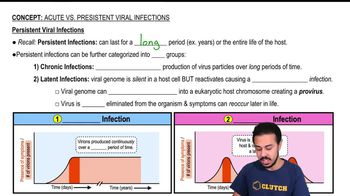
Viral Hemagglutination

Viral hemagglutination is the process by which certain viruses, like influenza, bind to and cause clumping of red blood cells. This reaction is used diagnostically to detect the presence of viruses by observing agglutination patterns, indicating viral particles in a sample.
Recommended video:
Guided course
05:12
Persistent Viral Infections

Hemagglutination Inhibition

Hemagglutination inhibition occurs when antibodies prevent viruses from agglutinating red blood cells. This reaction is used diagnostically to detect specific antibodies in patient serum, helping to identify past or current viral infections by measuring the inhibition of hemagglutination.
Recommended video:
Guided course
05:03
Enzyme Inhibition

Passive Agglutination

Passive agglutination involves the clumping of particles like latex beads coated with antigens or antibodies when mixed with a corresponding antibody or antigen. It is used diagnostically to detect antibodies or antigens in samples, such as in tests for rheumatoid factor or infectious agents.
Recommended video:
Guided course
04:18
Passive vs. Active Transport