Ch. 19 - Digestive System Infections
Norman-McKay- Microbiology: Basic and Clinical Principles 2nd Edition
Norman-McKay2nd EditionMicrobiology: Basic and Clinical PrinciplesISBN: 9780137661619Not the one you use?Change textbook
Chapter 19, Problem 2

Which of the following can occur even if the infectious agent is killed by the time it enters the host?
a. Salmonellosis
b. Cholera
c. Giardiasis
d. Food poisoning
e. Mumps

Verified step by step guidance
1
Understand the difference between infections caused by live pathogens and those caused by toxins produced by pathogens. Infections like salmonellosis, cholera, giardiasis, and mumps require live infectious agents to multiply and cause disease.
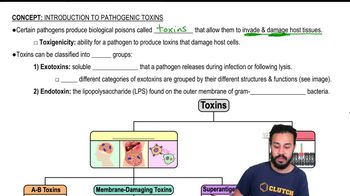
Recognize that food poisoning can occur due to ingestion of toxins produced by bacteria, such as Staphylococcus aureus or Clostridium botulinum, even if the bacteria themselves are no longer alive when consumed.
Analyze each option: Salmonellosis, cholera, giardiasis, and mumps are caused by live infectious agents that must be alive to cause disease, so they do not fit the condition.
Identify that food poisoning is caused by preformed toxins, which means the infectious agent can be killed, but the toxin remains active and causes symptoms.
Conclude that the correct answer is the condition caused by toxins present despite the death of the infectious agent, which is food poisoning.

Verified video answer for a similar problem:

This video solution was recommended by our tutors as helpful for the problem above.
Video duration:
1m
Was this helpful?

Key Concepts

Here are the essential concepts you must grasp in order to answer the question correctly.

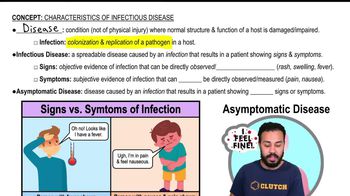
Infectious vs. Intoxication Diseases

Infectious diseases result from live pathogens invading and multiplying within the host, while intoxication diseases occur due to toxins produced by microbes, which can cause illness even if the microbes are dead when ingested.
Recommended video:
Guided course
05:09
Intro to Characteristics of Infectious Disease

Food Poisoning Mechanism

Food poisoning often involves ingestion of preformed bacterial toxins, such as those from Staphylococcus aureus, which cause symptoms without requiring live bacteria to infect the host.
Recommended video:
Guided course
01:59
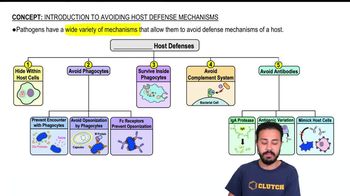
Introduction to Avoiding Host Defense Mechanisms

Examples of Diseases Caused by Live Pathogens

Diseases like salmonellosis, cholera, giardiasis, and mumps require live infectious agents to cause illness, as they depend on pathogen colonization or replication within the host.
Recommended video:
Guided course
03:40
Introduction to Pathogenic Toxins