Ch. 16 - Respiratory System Infections
Norman-McKay- Microbiology: Basic and Clinical Principles 2nd Edition
Norman-McKay2nd EditionMicrobiology: Basic and Clinical PrinciplesISBN: 9780137661619Not the one you use?Change textbook
Chapter 16, Problem 2

List the anatomical structures of the human upper respiratory tract.

Verified step by step guidance
1
Understand that the human upper respiratory tract includes all the anatomical structures involved in the passage of air from the external environment to the lower respiratory tract, primarily located above the vocal cords.
Identify the main external entry point: the nasal cavity, which filters, warms, and moistens the air inhaled through the nose.
Include the paranasal sinuses, which are air-filled spaces around the nasal cavity that help lighten the skull and produce mucus.
Recognize the pharynx, a muscular tube divided into three parts: nasopharynx (behind the nasal cavity), oropharynx (behind the oral cavity), and laryngopharynx (leading to the larynx).
Note the larynx (voice box) as the lower boundary of the upper respiratory tract, which connects the pharynx to the trachea and contains the vocal cords.

Verified video answer for a similar problem:

This video solution was recommended by our tutors as helpful for the problem above.
Video duration:
2m
Was this helpful?

Key Concepts

Here are the essential concepts you must grasp in order to answer the question correctly.

Anatomy of the Nasal Cavity

The nasal cavity is the initial part of the upper respiratory tract, responsible for filtering, warming, and humidifying inhaled air. It includes structures such as the nostrils, nasal septum, and turbinates (conchae) that increase surface area for air processing.
Recommended video:
Guided course
08:18
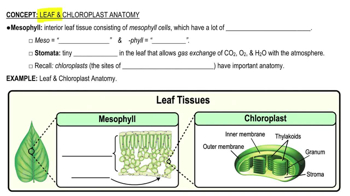
Leaf & Chloroplast Anatomy

Pharynx Structure and Function

The pharynx is a muscular tube connecting the nasal cavity to the larynx and esophagus. It is divided into three regions: nasopharynx, oropharynx, and laryngopharynx, serving as a passageway for both air and food.
Recommended video:
Guided course
06:04
Functional Groups

Role of the Larynx in the Upper Respiratory Tract

The larynx, or voice box, is located below the pharynx and above the trachea. It functions in protecting the lower respiratory tract during swallowing and houses the vocal cords, playing a key role in sound production.
Recommended video:
Guided course
03:27
1) Exposure to Pathogen