Ch. 10 - Host Microbe Interactions and Pathogenesis
Norman-McKay- Microbiology: Basic and Clinical Principles 2nd Edition
Norman-McKay2nd EditionMicrobiology: Basic and Clinical PrinciplesISBN: 9780137661619Not the one you use?Change textbook
Chapter 10, Problem 15

Which of the following is false regarding toxemia?
a. It can be caused by bacteria or fungi.
b. It is localized in the patient’s body.
c. It can be caused by endotoxins.
d. It can be caused by exotoxins.
e. Some forms are vaccine preventable.

Verified step by step guidance
1
Step 1: Understand the definition of toxemia. Toxemia refers to the presence of toxins in the bloodstream, which can cause systemic effects throughout the body rather than being localized.
Step 2: Analyze option (a): 'It can be caused by bacteria or fungi.' Both bacteria and fungi can produce toxins that enter the bloodstream, so this statement is generally true.
Step 3: Analyze option (b): 'It is localized in the patient’s body.' Since toxemia involves toxins circulating in the blood, it is systemic, not localized. This suggests that option (b) is likely false.
Step 4: Analyze options (c) and (d): 'It can be caused by endotoxins' and 'It can be caused by exotoxins.' Both endotoxins (from Gram-negative bacteria) and exotoxins (from various bacteria) can cause toxemia, so these statements are true.
Step 5: Analyze option (e): 'Some forms are vaccine preventable.' Certain toxemias caused by bacterial exotoxins, such as tetanus or diphtheria, are preventable by vaccines, so this statement is true.

Verified video answer for a similar problem:

This video solution was recommended by our tutors as helpful for the problem above.
Video duration:
2m
Was this helpful?

Key Concepts

Here are the essential concepts you must grasp in order to answer the question correctly.

Definition and Nature of Toxemia

Toxemia refers to the presence of toxins in the bloodstream, which can cause systemic effects. It is not localized but affects the entire body as toxins circulate through the blood. Understanding this helps distinguish toxemia from localized infections.
Recommended video:
Guided course
06:53
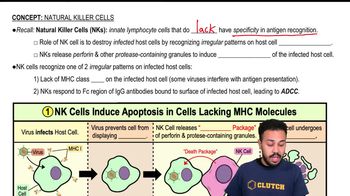
Natural Killer Cells

Types of Bacterial Toxins: Endotoxins vs. Exotoxins

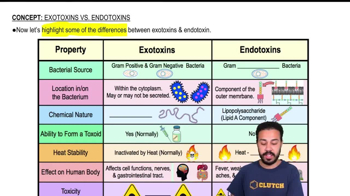
Endotoxins are components of the outer membrane of Gram-negative bacteria released upon cell death, causing inflammation and fever. Exotoxins are proteins secreted by bacteria that target specific cells. Both can cause toxemia, but their sources and mechanisms differ.
Recommended video:
Guided course
07:22
Exotoxins vs. Endotoxin Review

Prevention of Toxemia through Vaccination

Some toxemias are preventable by vaccines that target the bacteria producing harmful toxins, such as tetanus or diphtheria. Vaccination stimulates immunity against the toxin or the pathogen, reducing the risk of systemic toxin-related diseases.
Recommended video:
Guided course
04:59
1) Viruses Prevent Antiviral Effects of AVPs