Ch. 22 - Pathogenic Fungi
Bauman - Microbiology with Diseases by Taxonomy 6th Edition
Bauman6th EditionMicrobiology with Diseases by TaxonomyISBN: 9780134832302Not the one you use?Change textbook
Chapter 22, Problem 19

One of the more poisonous mycotoxins is produced by _________.
a. Amanita phalloides
b. Amanita muscaria
c. Psilocybe cubensis
d. Claviceps purpurea

Verified step by step guidance
1
Step 1: Understand the term 'mycotoxin' — it refers to toxic compounds produced by certain fungi that can cause poisoning when ingested.
Step 2: Review the options given, which are all fungi species: Amanita phalloides, Amanita muscaria, Psilocybe cubensis, and Claviceps purpurea.
Step 3: Recall that Amanita phalloides, also known as the 'death cap' mushroom, produces amatoxins, which are highly poisonous mycotoxins affecting the liver.
Step 4: Recognize that Amanita muscaria produces psychoactive compounds but is less deadly compared to Amanita phalloides, and Psilocybe cubensis produces psilocybin, a hallucinogen, not a deadly mycotoxin.
Step 5: Note that Claviceps purpurea produces ergot alkaloids, which are toxic but classified differently from typical mycotoxins like amatoxins.

Verified video answer for a similar problem:

This video solution was recommended by our tutors as helpful for the problem above.
Video duration:
2m
Was this helpful?

Key Concepts

Here are the essential concepts you must grasp in order to answer the question correctly.

Mycotoxins

Mycotoxins are toxic compounds produced by certain fungi that can cause severe poisoning in humans and animals. They vary in toxicity and effects, ranging from liver damage to neurological symptoms. Understanding which fungi produce specific mycotoxins is crucial for identifying poisonous species.

Amanita phalloides and its toxins

Amanita phalloides, known as the death cap mushroom, produces amatoxins, which are among the most deadly mycotoxins. These toxins inhibit RNA polymerase II, leading to liver and kidney failure. Recognizing this species is important due to its high toxicity and fatal potential.
Recommended video:
Guided course
03:40
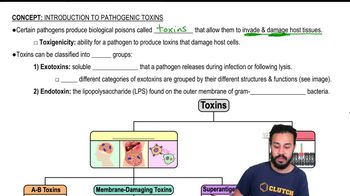
Introduction to Pathogenic Toxins

Differences among listed fungi

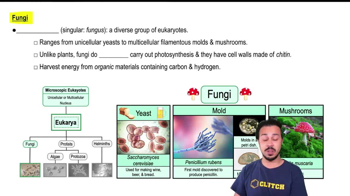
The fungi listed differ in their toxin production and effects: Amanita muscaria produces neurotoxic ibotenic acid and muscimol; Psilocybe cubensis contains psychoactive psilocybin; Claviceps purpurea produces ergot alkaloids causing ergotism. Identifying these differences helps in selecting the correct poisonous mycotoxin producer.
Recommended video: