Ch. 10 - Controlling Microbial Growth in the Body: Antimicrobial Drugs
Bauman - Microbiology with Diseases by Taxonomy 6th Edition
Bauman6th EditionMicrobiology with Diseases by TaxonomyISBN: 9780134832302Not the one you use?Change textbook
Chapter 10, Problem 9

Which of the following statements is false concerning antiviral drugs?
a. Macrolide drugs block attachment sites on the host cell wall and prevent viruses from entering.
b. Drugs that neutralize the acidity of phagolysosomes prevent viral uncoating.
c. Nucleotide analogs can be used to stop microbial replication.
d. Drugs containing protease inhibitors retard viral growth by blocking the production of essential viral proteins.

Verified step by step guidance
1
Step 1: Understand the mechanism of action of each class of antiviral drugs mentioned in the options.
Step 2: Analyze option (a): Macrolide drugs are primarily antibiotics targeting bacterial ribosomes, not antiviral agents. Consider whether they block attachment sites on host cells to prevent viral entry.
Step 3: Analyze option (b): Drugs that neutralize the acidity of phagolysosomes can prevent viral uncoating by inhibiting the acid-dependent step required for some viruses to release their genome inside the host cell.
Step 4: Analyze option (c): Nucleotide analogs mimic natural nucleotides and can be incorporated into viral DNA or RNA, thereby stopping viral replication.
Step 5: Analyze option (d): Protease inhibitors block viral proteases, enzymes essential for processing viral polyproteins into functional proteins, thus retarding viral growth.

Verified video answer for a similar problem:

This video solution was recommended by our tutors as helpful for the problem above.
Video duration:
3m
Was this helpful?

Key Concepts

Here are the essential concepts you must grasp in order to answer the question correctly.

Mechanism of Antiviral Drugs

Antiviral drugs target specific stages of the viral life cycle, such as entry, uncoating, replication, or assembly. Understanding how these drugs interfere with viral processes helps determine their effectiveness and specificity against viruses.
Recommended video:
Guided course
01:59
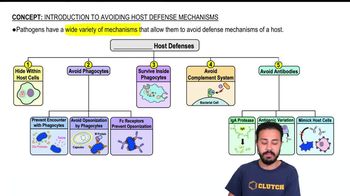
Introduction to Avoiding Host Defense Mechanisms

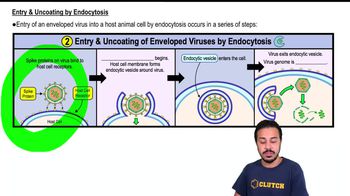
Viral Entry and Uncoating

Viruses enter host cells by attaching to specific receptors and then uncoat to release their genetic material. Some drugs prevent entry by blocking attachment sites, while others inhibit uncoating by altering the environment inside cellular compartments like phagolysosomes.
Recommended video:
Guided course
02:29
Entry & Uncoating by Endocytosis

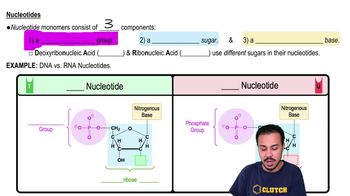
Nucleotide Analogs and Protease Inhibitors

Nucleotide analogs mimic viral nucleotides, disrupting viral genome replication by causing premature chain termination. Protease inhibitors block viral proteases, enzymes essential for processing viral proteins, thereby preventing the maturation of infectious viral particles.
Recommended video: