The gut microbiome is the collection of microbes, including bacteria, fungi, and archaea, that live in the digestive tract.
What is microbial antagonism in the digestive system?
Microbial antagonism is when beneficial microbes in the gut outcompete pathogens, preventing harmful microbes from colonizing.
Which vitamins are synthesized by gut bacteria?
Gut bacteria synthesize vitamins B (including folate) and vitamin K.
How do gut microbes influence immune function?
Gut microbes help train the immune system to recognize what should and should not be present in the digestive tract.
What percentage of dry fecal mass is made up of microbes?
About 25-40% of dry fecal mass consists of microbes, mainly bacteria.
Name three major bacterial genera found in the gut microbiome.
Escherichia (E. coli), Bacteroides, and Lactobacillus are major bacterial genera in the gut.
Where in the digestive tract is Streptococcus commonly found?
Streptococcus is commonly found in the mouth as part of the mouth microbiome.
Why are there few microbes in the esophagus and stomach?
The esophagus has few microbes because food moves through quickly, and the stomach is too acidic for most microbes to survive.
What is the role of E. coli in the gut microbiome?
E. coli is a normal part of a healthy gut microbiome, but some strains can cause illness.
Which gut microbes produce both B vitamins and vitamin K?
Escherichia (E. coli) and Bacteroides produce both B vitamins and vitamin K.
What fungus is commonly found in the large intestine?
Candida is a fungus commonly found in the large intestine.
What can happen if Candida overgrows in the gut?
If Candida overgrows or grows in the wrong places, it can cause health problems.
Besides bacteria and fungi, what other microbes are present in the gut?
Archaea and some protozoa, like antamoeba, are also present in the gut microbiome.
How does the gut microbiome affect body weight?
Changes in the gut microbiome can influence body weight, though the exact link is not fully understood.
Why is understanding the gut microbiome important for digestive health?
Understanding the gut microbiome is essential for grasping digestive system health, microbial antagonism, and the balance between normal microbiota and pathogens.
 Back
Back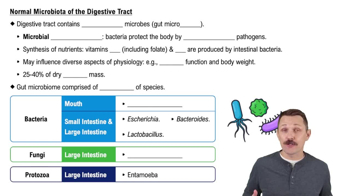
 04:54
04:54