Back

Steps of the Inflammatory Response quiz

Control buttons has been changed to "navigation" mode.
1/15
  • What is the first step of the inflammatory response?

    The first step is tissue damage and infection, which allows microbes to bypass the first line of innate immunity.
  • What immediate action do blood vessels take after tissue injury and why?

    Blood vessels briefly constrict (vasoconstriction) to prevent blood loss.
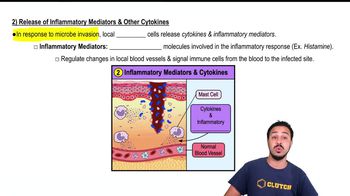
  • Which cells are already present in tissues and release inflammatory mediators upon infection?

    Mast cells are present in tissues and release cytokines and inflammatory mediators when infection occurs.
  • What is the role of cytokines and inflammatory mediators in the inflammatory response?

    They promote inflammation, regulate changes in local blood vessels, and attract immune cells to the infection site.
  • What is histamine and what does it do during inflammation?

    Histamine is an inflammatory mediator that promotes inflammation and causes blood vessels to dilate.
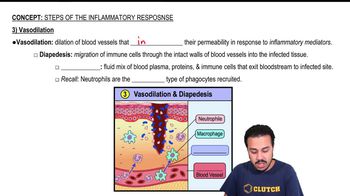
  • What is the third step of the inflammatory response called, and what happens during it?

    The third step is vasodilation, where blood vessels enlarge and become more permeable to allow immune cells to reach the infection site.
  • What is diapedesis?

    Diapedesis is the migration of immune cells through the intact walls of blood vessels into infected tissue.
  • Which immune cells are the first to be recruited to the site of infection?

    Neutrophils are the first phagocytes recruited to the site of infection.
  • What is exudate in the context of inflammation?

    Exudate is the fluid mixture of blood plasma, proteins, and immune cells that exits the bloodstream to the infected site.
  • What is the fourth and final step of the inflammatory response?

    The fourth step is the removal of invading microbes by phagocytic cells like neutrophils and macrophages.
  • How do neutrophils and macrophages eliminate microbes during inflammation?

    Neutrophils remove microbes through degranulation or phagocytosis, while macrophages engulf and destroy microbes and dead cells.
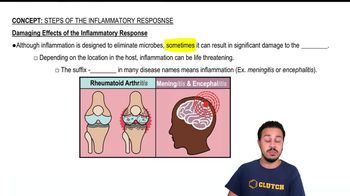
  • Why can the inflammatory response sometimes be damaging to the host?

    Inflammation can cause accidental damage to host tissues, similar to how a sprinkler system can damage equipment while stopping a fire.
  • What does the suffix '-itis' indicate in medical terms?

    The suffix '-itis' means inflammation, as seen in terms like meningitis and arthritis.
  • Why can inflammation in certain locations, like the brain, be life-threatening?

    Inflammation in critical areas such as the brain can disrupt essential functions and become life-threatening.
  • What are two examples of diseases with the '-itis' suffix, and what do they mean?

    Meningitis is inflammation of the meninges, and rheumatoid arthritis is inflammation of the joints.