Back

Review of Physical Methods to Control Microbial Growth definitions

Control buttons has been changed to "navigation" mode.
1/16
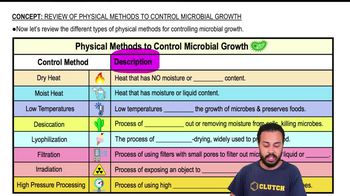
  • Dry Heat

    Application of heat without moisture, including incineration or hot air ovens, to destroy microbes by oxidation.
  • Moist Heat

    Use of heat with moisture, such as boiling, pasteurization, or autoclaving, to denature microbial proteins.
  • Incineration

    Direct flame technique that completely burns and eliminates microbial contaminants.
  • Hot Air Oven

    Enclosed device using dry heat at high temperatures to sterilize equipment and materials.
  • Boiling

    Exposure of materials to water at 100°C, effectively killing most microbes except some spores.
  • Pasteurization

    Controlled heating process that reduces microbial load in liquids without compromising quality.
  • Autoclave

    Pressurized steam chamber that achieves sterilization by reaching temperatures above boiling.
  • Low Temperatures

    Use of refrigeration or freezing to inhibit microbial growth and preserve perishable items.
  • Desiccation

    Removal of moisture from cells, leading to microbial death by dehydration.
  • Lyophilization

    Freeze-drying method combining low temperature and desiccation to preserve biological materials.
  • Filtration

    Physical removal of microbes from liquids or air using barriers with pores too small for passage.
  • HEPA Filter

    High-efficiency particulate air device that traps airborne microbes, ensuring clean air output.
  • Irradiation

    Exposure to radiation to eliminate microbes, including both ionizing and non-ionizing types.
  • Ionizing Radiation

    High-energy rays with deep penetration, generating reactive species that damage microbial DNA.
  • Non-ionizing Radiation

    Lower energy rays with limited penetration, effective only on surfaces directly exposed.
  • High Pressure Processing

    Application of extreme pressures to disrupt and kill microbes without heat.