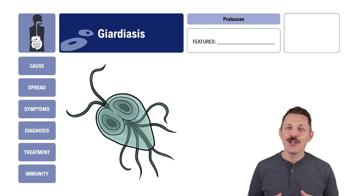
A digestive infection by a flagellated protozoan, often causing greasy diarrhea, gas, and nutrient malabsorption, especially after ingesting contaminated water.
Giardia duodenalis
A single-celled eukaryote with flagella, responsible for a common waterborne intestinal disease in humans and some animals.
Trophozoite
The active, feeding stage of a protozoan that attaches to the small intestine and absorbs nutrients from the host.
Cyst
A dormant, protective form enabling survival in harsh environments and facilitating transmission via fecal-oral routes.
Flagella
Whip-like structures enabling protozoan motility, allowing movement through the intestinal environment.
Fecal-oral transmission
A route of infection where pathogens from feces contaminate food or water, leading to ingestion by a new host.
Zoonosis
A disease that can be transmitted from animals to humans, often through contaminated water in outdoor settings.
Traveler's diarrhea
A prolonged gastrointestinal illness often acquired in regions with lower water sanitation, sometimes caused by protozoan infection.
Microscopic examination
A diagnostic method involving visual identification of protozoan forms in fecal samples using a microscope.
Antigen test
A laboratory technique detecting specific proteins from pathogens in stool, aiding rapid diagnosis of infection.
Metronidazole
An antimicrobial medication commonly prescribed to eliminate protozoan infections of the digestive tract.
Nitazoxanide
A therapeutic agent effective against certain protozoan infections, used as an alternative to other treatments.
Nutrient malabsorption
A condition where the intestinal lining fails to absorb essential nutrients, often due to protozoan attachment.
Asymptomatic carrier
An individual harboring a pathogen without showing symptoms, yet capable of spreading the infection.
Water sanitation
The process of treating and maintaining water quality to prevent transmission of waterborne diseases.
 Back
Back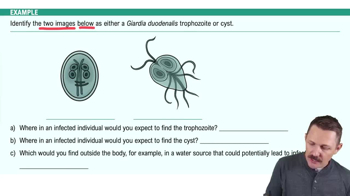
 03:04
03:04