What is the defining feature of pneumonia in the lungs?
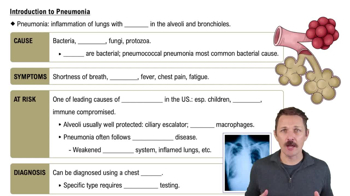
Pneumonia is defined by inflammation of the lungs with fluid filling the alveoli and bronchioles.
What is the most common cause of bacterial pneumonia?
Streptococcus pneumoniae is the most common bacterial cause of pneumonia.
What structural feature of Streptococcus pneumoniae increases its virulence?
Its polysaccharide capsule prevents phagocytosis, making it harder for immune cells to eliminate the bacteria.
What are the typical symptoms of pneumonia?
Symptoms include rapid onset of fever, chest pain, cough, shortness of breath, fatigue, and sometimes rust-colored sputum.
Which populations are at highest risk for severe pneumonia?
Children, the elderly, and immunocompromised individuals are at highest risk for severe pneumonia.
How does pneumonia often develop following other respiratory diseases?
Other respiratory diseases like the flu or COVID can weaken the immune system and inflame the lungs, making it easier for pathogens to infect the alveoli.
What is the primary method for diagnosing pneumonia?
A chest x-ray is the primary method, showing fluid in the lungs as white areas instead of the normal black, air-filled spaces.
How can Streptococcus pneumoniae be identified in the laboratory?
It can be identified by gram stain as gram-positive diplococci, sputum smear, culture, and urine antigen tests.
What does 'typical pneumonia' refer to?
Typical pneumonia refers to the rapid onset of symptoms and alveolar consolidation, not the specific cause.
How is Streptococcus pneumoniae usually transmitted?
It spreads through respiratory droplets via direct or indirect transmission.
Why do many healthy people carry Streptococcus pneumoniae without getting pneumonia?
The bacteria are often present in the upper respiratory tract, but disease only occurs if they establish infection in the alveoli, usually when the immune system is weakened.
What is the initial treatment for pneumococcal pneumonia?
Initial treatment is with beta-lactam antibiotics like penicillin or cephalosporins, adjusted if resistance is detected.
What is the significance of rust-colored sputum in pneumonia?
Rust-colored sputum results from inflammation and minor bleeding in the lungs, which tinges the sputum with blood.
What role do pneumococcal conjugate vaccines play in pneumonia prevention?
They provide immunity against Streptococcus pneumoniae, especially protecting children and the elderly.
Why is pneumonia a leading cause of hospitalization in the United States?
Because it can cause severe illness, especially in vulnerable populations like children, the elderly, and those with compromised immunity.
 Back
Back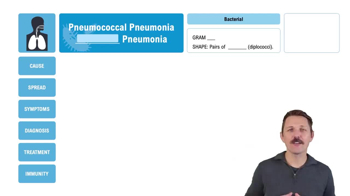
 06:07
06:07