Back

Introduction to Regulation of Gene Expression definitions

Control buttons has been changed to "navigation" mode.
1/15
  • Gene Expression

    Process resulting in the creation of a gene's final product, often a protein, through transcription and translation.
  • Prokaryotic Cell

    Cell type, such as bacteria or archaea, where gene regulation mainly occurs at the transcriptional control stage.
  • Eukaryotic Cell

    Cell type capable of regulating gene expression at multiple stages, from DNA accessibility to protein modification.
  • Chromatin Rearrangement

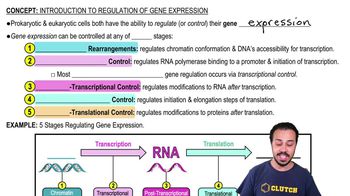
    Modification of DNA structure affecting its accessibility for transcription, serving as the first stage of gene regulation.
  • Transcriptional Control

    Regulation of RNA polymerase binding and initiation of transcription, especially prominent in prokaryotes.
  • Post-Transcriptional Control

    Modification of RNA molecules after transcription, influencing the final gene product before translation.
  • Translational Control

    Regulation of the initiation and elongation steps during translation, impacting protein synthesis.
  • Post-Translational Control

    Modification of proteins after translation, altering protein function or stability.
  • RNA Polymerase

    Enzyme responsible for synthesizing RNA from a DNA template during transcription.
  • Promoter

    DNA sequence where RNA polymerase binds to initiate transcription.
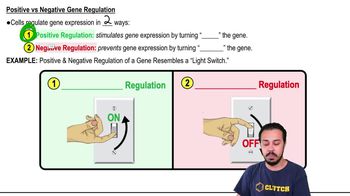
  • Positive Regulation

    Mechanism stimulating gene expression by turning genes on, increasing the production of gene products.
  • Negative Regulation

    Mechanism inhibiting gene expression by turning genes off, preventing the formation of gene products.
  • Transcription

    First step of gene expression, where DNA is used to synthesize RNA.
  • Translation

    Second step of gene expression, where RNA is used to build a protein.
  • Protein Modification

    Chemical changes to proteins after translation, affecting their activity, location, or stability.