Back

Introduction to Cells of the Immune System definitions

Control buttons has been changed to "navigation" mode.
1/15
  • Innate Immunity

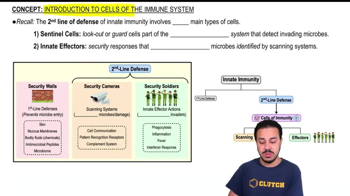
    Defense mechanism present from birth, providing immediate, non-specific protection against invading microbes.
  • Sentinel Cells

    Lookout cells acting as security cameras, detecting invading microbes and initiating immune responses.
  • Innate Effectors

    Cells responsible for eliminating identified invaders, acting as security soldiers in immune defense.
  • Hematopoiesis

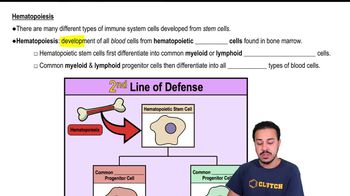
    Developmental process in bone marrow where all blood cells originate from stem cells.
  • Hematopoietic Stem Cells

    Multipotent cells in bone marrow capable of giving rise to all blood cell types.
  • Bone Marrow

    Primary site where blood cell formation and differentiation occur.
  • Common Myeloid Progenitor

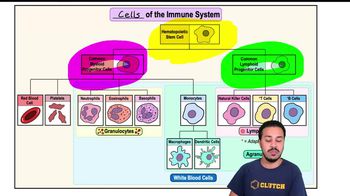
    Intermediate cell type giving rise to erythrocytes, platelets, and certain white blood cells.
  • Common Lymphoid Progenitor

    Intermediate cell type producing lymphocytes, including T cells, B cells, and natural killer cells.
  • Erythrocytes

    Cells specialized for transporting oxygen throughout the body via the bloodstream.
  • Platelets

    Cell fragments essential for blood clotting and preventing excessive bleeding.
  • Leukocytes

    White blood cells crucial for immune defense, encompassing various specialized cell types.
  • Granulocytes

    Leukocytes containing granules, including neutrophils, eosinophils, and basophils, involved in innate immunity.
  • Agranulocytes

    Leukocytes lacking visible granules, including monocytes, macrophages, dendritic cells, and lymphocytes.
  • Lymphocytes

    Subset of white blood cells including T cells, B cells, and natural killer cells, key to adaptive and innate immunity.
  • Adaptive Immunity

    Specific immune response involving memory, primarily mediated by T cells and B cells.