Back

Gram-Positive vs. Gram-Negative Cell Walls definitions

Control buttons has been changed to "navigation" mode.
1/14
  • Gram-Positive Cell

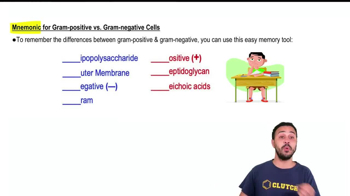
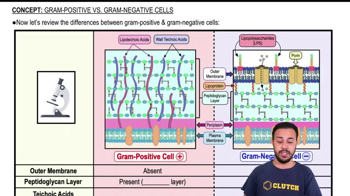
    A type of bacterial cell with a thick peptidoglycan layer and teichoic acids, lacking an outer membrane and lipopolysaccharides.
  • Gram-Negative Cell

    A bacterial cell characterized by a thin peptidoglycan layer, an outer membrane with lipopolysaccharides, and porins.
  • Peptidoglycan

    A mesh-like polymer forming the main structural component of bacterial cell walls, varying in thickness between cell types.
  • Teichoic Acid

    A molecule found in thick cell walls, either attached to the plasma membrane or embedded in peptidoglycan, absent in certain bacteria.
  • Lipopolysaccharide

    A molecule present in the outer membrane of some bacteria, also known as endotoxin, contributing to structural integrity and immune response.
  • Outer Membrane

    An additional lipid bilayer found outside the peptidoglycan layer in certain bacteria, containing lipopolysaccharides and porins.
  • Porin

    A protein channel embedded in the outer membrane, facilitating the transport of molecules across the membrane.
  • Plasma Membrane

    A phospholipid bilayer present in all cells, serving as a selective barrier between the cell interior and its environment.
  • Periplasmic Space

    A gel-like region located between the plasma membrane and the cell wall or outer membrane, containing various enzymes and proteins.
  • Lipoprotein

    A molecule anchoring the outer membrane to the peptidoglycan layer in certain bacteria, contributing to cell envelope stability.
  • Endotoxin

    A toxic component of the outer membrane in some bacteria, synonymous with lipopolysaccharide, triggering immune responses.
  • Cell Wall

    A rigid structure surrounding the plasma membrane, providing shape and protection, primarily composed of peptidoglycan.
  • Wall Teichoic Acid

    A type of teichoic acid mainly embedded in the peptidoglycan layer, not directly connected to the plasma membrane.
  • Lipoteichoic Acid

    A variant of teichoic acid that connects the peptidoglycan layer directly to the plasma membrane in certain bacteria.