Back

Functions of T Lymphocytes quiz

Control buttons has been changed to "navigation" mode.
1/15
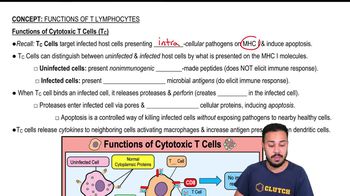
  • What is the main function of cytotoxic T cells (TC cells)?

    Cytotoxic T cells target infected host cells presenting intracellular pathogens on MHC class I and induce apoptosis to eliminate both the infected cell and the pathogen.
  • How do cytotoxic T cells distinguish between healthy and infected host cells?

    They recognize the type of antigen presented on MHC class I; healthy cells present self-peptides, while infected cells present immunogenic microbial antigens.
  • What happens when a cytotoxic T cell recognizes an infected cell?

    It releases proteins like perforin and proteases that induce apoptosis in the infected cell.
  • What is the role of perforin released by cytotoxic T cells?

    Perforin creates pores in the infected cell membrane, allowing proteases to enter and degrade cellular proteins.
  • Why is apoptosis an important mechanism for cytotoxic T cells?

    Apoptosis kills infected cells without releasing pathogens to nearby healthy cells, containing the infection.
  • What additional molecules can cytotoxic T cells release to boost the immune response?

    They can release cytokines that activate macrophages and increase antigen presentation on dendritic cells.
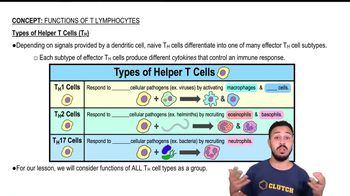
  • What are the three main subtypes of helper T cells discussed?

    The three main subtypes are TH1, TH2, and TH17 cells.
  • What is the primary function of TH1 helper T cells?

    TH1 cells respond to intracellular pathogens by activating macrophages and cytotoxic T cells.
  • How do TH2 helper T cells contribute to the immune response?

    TH2 cells respond to multicellular pathogens by recruiting and activating eosinophils and basophils.
  • What type of pathogens do TH17 helper T cells target?

    TH17 cells target extracellular pathogens by recruiting and activating neutrophils.
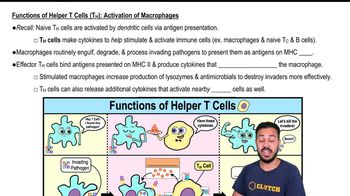
  • How do helper T cells generally enhance the immune response?

    Helper T cells produce cytokines that stimulate and activate other immune cells, improving their immune capabilities.
  • What is the role of helper T cells in macrophage activation?

    Helper T cells release cytokines that activate macrophages, increasing their production of lysosomes and antimicrobials.
  • How do macrophages present antigens to helper T cells?

    Macrophages engulf and degrade pathogens, then present antigens on their MHC class II molecules to helper T cells.
  • What effect do activated macrophages have after stimulation by helper T cells?

    Activated macrophages have improved destructive abilities, producing more lysosomes and antimicrobials to destroy invaders more effectively.
  • What is the main difference between cytotoxic T cells and helper T cells in their immune functions?

    Cytotoxic T cells induce apoptosis in infected cells, while helper T cells activate and enhance the functions of other immune cells through cytokine release.