Back

Endocytosis and Exocytosis definitions

Control buttons has been changed to "navigation" mode.
1/15
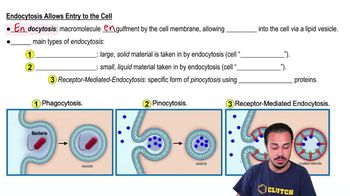
  • Endocytosis

    Macromolecule engulfment by the cell membrane, forming a lipid vesicle for entry into the cell.
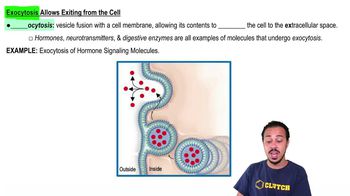
  • Exocytosis

    Vesicle fusion with the cell membrane, releasing contents into the extracellular space.
  • Phagocytosis

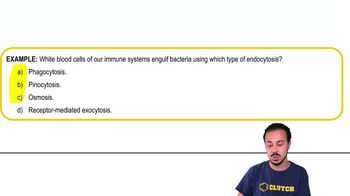
    Uptake of large solid materials, such as bacteria, into the cell via a membrane-bound vesicle.
  • Pinocytosis

    Internalization of small liquid materials into the cell, often called cellular drinking.
  • Receptor-mediated Endocytosis

    Selective uptake of molecules using specific membrane proteins, a specialized form of pinocytosis.
  • Lipid Vesicle

    Membrane-bound bubble formed during transport processes, enclosing materials for movement across the membrane.
  • Plasma Membrane

    Cellular boundary that regulates entry and exit of substances, crucial for bulk transport mechanisms.
  • Bulk Transport

    Movement of large molecules across the cell membrane via vesicle formation, including endocytosis and exocytosis.
  • Receptor Protein

    Membrane-embedded molecule that binds specific substances to trigger selective internalization.
  • Extracellular Space

    Area outside the cell where exocytosed materials are released.
  • Hormone

    Signaling molecule released from cells via exocytosis to regulate physiological processes.
  • Neurotransmitter

    Chemical messenger released by nerve cells through exocytosis to transmit signals.
  • Digestive Enzyme

    Protein secreted from cells by exocytosis to break down nutrients outside the cell.
  • Macromolecule

    Large biological molecule, such as proteins or nucleic acids, transported via bulk mechanisms.
  • Membrane Fusion

    Process where a vesicle merges with the plasma membrane, enabling content release or uptake.