Back

Colonization of Susceptible Host quiz

Control buttons has been changed to "navigation" mode.
1/15
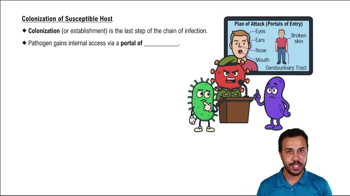
  • What is the final step in the chain of infection?

    The final step is colonization or establishment of the pathogen in or on the susceptible host.
  • What are portals of entry for pathogens?

    Portals of entry are body orifices or openings such as the eyes, ears, nose, mouth, genitourinary tract, or broken skin.
  • Why does the entry point matter for successful colonization?

    The entry point matters because many pathogens are tissue specific and only cause disease in certain tissues.
  • What environmental condition in the stomach affects pathogen colonization?

    The stomach is very acidic, which can prevent some pathogens from surviving and colonizing.
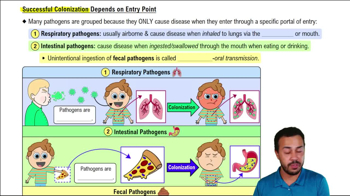
  • How do respiratory pathogens typically cause disease?

    Respiratory pathogens cause disease when inhaled into the lungs via the nose or mouth.
  • What happens if respiratory pathogens are ingested instead of inhaled?

    They are less likely to cause disease if ingested into the digestive system.
  • How do intestinal pathogens usually enter the body?

    Intestinal pathogens are most likely to cause disease when ingested or swallowed through the mouth.
  • What is fecal-oral transmission?

    Fecal-oral transmission is the unintentional ingestion of fecal pathogens, often due to poor hygiene.
  • Why is hygiene important in preventing fecal-oral transmission?

    Hygiene prevents accidental ingestion of fecal pathogens, reducing the risk of disease.
  • What is tissue specificity in pathogens?

    Tissue specificity means pathogens only attach and cause disease in certain tissues.
  • What role do environmental conditions play in colonization?

    Environmental conditions, like acidity, affect whether pathogens can survive and colonize tissues.
  • What is the significance of adherence and adhesins in pathogenesis?

    Adherence and adhesins help pathogens attach to specific tissues, which is crucial for colonization.
  • How does tissue tropism relate to infection control?

    Understanding tissue tropism helps in controlling infections by knowing which tissues are susceptible.
  • What is the main portal of entry for respiratory pathogens?

    The main portal of entry is inhalation through the nose or mouth.
  • What can happen if a child eats food contaminated with fecal pathogens?

    The child may develop disease in the digestive system, such as a tummy ache.