Back

Chemical Preservation of Perishable Products definitions

Control buttons has been changed to "navigation" mode.
1/14
  • Chemical Preservation

    Application of non-toxic substances to delay spoilage and extend shelf life of items prone to rapid decay.
  • Perishable Products

    Items such as fruits, vegetables, and meats that are likely to spoil quickly without intervention.
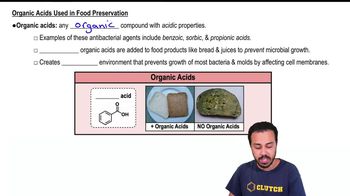
  • Organic Acids

    Weak compounds with acidic properties, often added to foods to inhibit microbial growth by acidifying the environment.
  • Benzoic Acid

    A weak antimicrobial compound with a carboxylic acid group, commonly used to preserve bread and juices.
  • Sorbic Acid

    A weak organic compound added to foods to prevent growth of bacteria and molds by creating an acidic environment.
  • Propionic Acid

    A preservative organic acid used in foods like bread to inhibit microbial and mold growth.
  • Carboxylic Acid Group

    A functional group in organic molecules responsible for acidic properties and antimicrobial activity.
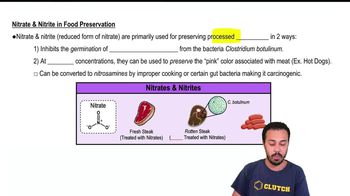
  • Nitrate

    A compound used in processed meats to inhibit bacterial endospore germination and maintain pink coloration.
  • Nitrite

    A reduced form of nitrate, crucial for preventing Clostridium botulinum growth and preserving meat color.
  • Clostridium botulinum

    A bacterium whose endospores can cause foodborne illness if not inhibited by certain preservatives.
  • Endospore

    A dormant, resistant structure formed by bacteria, capable of surviving harsh conditions and causing spoilage.
  • Nitrosamines

    Potentially carcinogenic compounds formed from nitrates or nitrites during improper cooking or by gut bacteria.
  • Carcinogen

    A substance capable of causing cancer, sometimes produced during food preservation by chemical conversion.
  • Antimicrobial Agent

    A substance that inhibits or kills microorganisms, used to prevent spoilage in perishable foods.