Back

Chemical Reactions quiz

Control buttons has been changed to "navigation" mode.
1/15
  • What are the starting materials in a chemical reaction called?

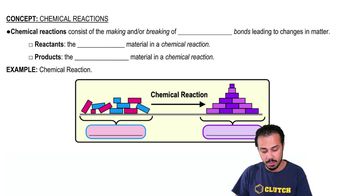
    The starting materials in a chemical reaction are called reactants.
  • What are the substances formed as a result of a chemical reaction called?

    The substances formed as a result of a chemical reaction are called products.
  • What do chemical reactions involve in terms of chemical bonds?

    Chemical reactions involve the making and/or breaking of chemical bonds.
  • How are chemical reactions categorized based on energy requirements?

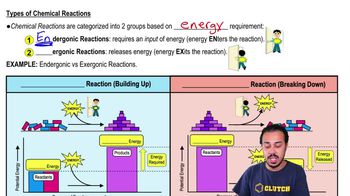
    Chemical reactions are categorized as endergonic or exergonic based on their energy requirements.
  • What is an endergonic reaction?

    An endergonic reaction is a chemical reaction that requires an input of energy to proceed.
  • What happens to energy during an exergonic reaction?

    During an exergonic reaction, energy is released into the environment.
  • In an endergonic reaction, how does the energy of the products compare to the reactants?

    In an endergonic reaction, the products have higher potential energy than the reactants.
  • In an exergonic reaction, how does the energy of the products compare to the reactants?

    In an exergonic reaction, the products have lower potential energy than the reactants.
  • What does the prefix 'en-' in endergonic indicate about energy flow?

    The prefix 'en-' in endergonic indicates that energy is entering the reaction.
  • What does the prefix 'ex-' in exergonic indicate about energy flow?

    The prefix 'ex-' in exergonic indicates that energy is exiting or leaving the reaction.
  • What type of reaction builds larger, more complex molecules from smaller ones?

    Endergonic reactions build larger, more complex molecules from smaller ones.
  • What type of reaction breaks down larger molecules into smaller components?

    Exergonic reactions break down larger molecules into smaller components.
  • Why do endergonic reactions require energy input?

    Endergonic reactions require energy input because they build up molecules, resulting in products with higher energy.
  • Why do exergonic reactions release energy?

    Exergonic reactions release energy because they break down molecules, resulting in products with lower energy.
  • Why is understanding endergonic and exergonic reactions important for biology?

    Understanding these reactions is crucial for studying how cells utilize energy for various biological processes.