Back

The Glycocalyx: Capsules & Slime Layers definitions

Control buttons has been changed to "navigation" mode.
1/13
  • Glycocalyx

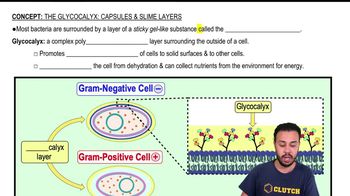
    A sticky, gel-like polysaccharide layer surrounding bacteria, aiding in adhesion, protection, and nutrient collection.
  • Capsule

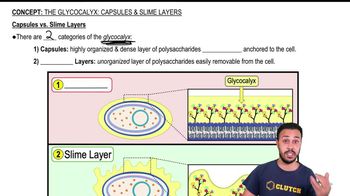
    A dense, highly organized polysaccharide layer tightly anchored to the bacterial cell, offering strong protection.
  • Slime Layer

    An unorganized, easily removable polysaccharide coating loosely attached to the bacterial cell surface.
  • Polysaccharide

    A complex carbohydrate forming the main structural component of bacterial surface coatings like capsules and slime layers.
  • Adhesion

    The process by which bacterial cells stick to solid surfaces or each other, often facilitated by surface layers.
  • Dehydration

    A condition prevented in bacteria by surface layers that help retain water around the cell.
  • Nutrient Collection

    The gathering of environmental substances for energy, enhanced by sticky bacterial surface layers.
  • Biofilm

    A structured community of bacteria attached to surfaces, often initiated by sticky external layers.
  • Gram Negative Cell

    A bacterial type with a thin peptidoglycan layer, which can be surrounded by external polysaccharide coatings.
  • Gram Positive Cell

    A bacterial type with a thick peptidoglycan layer, also capable of being encased by external sticky layers.
  • Organization

    The degree of structural arrangement in bacterial surface layers, distinguishing dense capsules from loose slime layers.
  • Anchoring

    The extent to which a bacterial surface layer is attached to the cell, with capsules being tightly bound.
  • Protection

    A defensive benefit provided by bacterial surface layers against environmental threats like water loss.