Back

Animal Viruses: 3. Synthesis & Replication quiz

Control buttons has been changed to "navigation" mode.
1/15
  • What are the two main events required for complete replication of an animal virus?

    The synthesis of viral structural proteins and enzymes, and the replication of the viral genome.
  • What happens to the viral genome after entry and uncoating in the host cell?

    The viral genome is released into the cytoplasm, where synthesis and replication begin.
  • How is viral mRNA produced from a DNA viral genome?

    Viral DNA is transcribed using the host cell's transcriptional machinery to create viral mRNA.
  • What is the role of host ribosomes in viral protein synthesis?

    Host ribosomes translate viral mRNA to synthesize viral proteins.
  • What must happen to single-stranded DNA (ssDNA) viral genomes before replication and protein synthesis?

    ssDNA must be converted into double-stranded DNA (dsDNA) before replication and protein synthesis can occur.
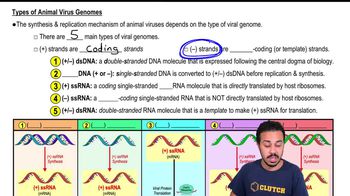
  • What is the significance of plus (+) and minus (-) strands in viral genomes?

    Plus strands are coding strands that directly encode proteins, while minus strands are template strands complementary to plus strands.
  • How is a plus ssRNA viral genome expressed in the host cell?

    Plus ssRNA acts as mRNA and can be directly translated by host ribosomes to form viral proteins.
  • What must happen to a minus ssRNA viral genome before protein synthesis?

    Minus ssRNA must be used to build plus ssRNA (mRNA), which can then be translated by host ribosomes.
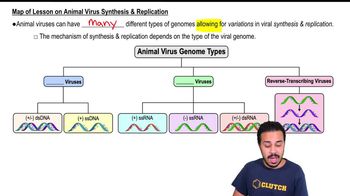
  • What are the five main types of viral genomes found in animal viruses?

    Plus-minus dsDNA, ssDNA, plus ssRNA, minus ssRNA, and plus-minus dsRNA.
  • What is a common requirement for all viral genome types during infection?

    All viral genome types must eventually generate plus ssRNA (mRNA) for protein synthesis.
  • What does ds stand for in viral genome nomenclature?

    ds stands for double stranded.
  • What does ss stand for in viral genome nomenclature?

    ss stands for single stranded.
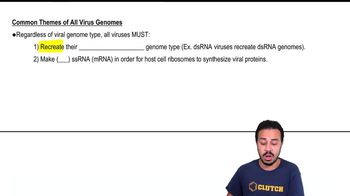
  • What are the two essential tasks all viruses must accomplish during replication?

    Recreate their original genome type and produce plus ssRNA (mRNA) for protein synthesis.
  • How is a plus-minus dsRNA viral genome used in protein synthesis?

    The double-stranded RNA is used as a template to make plus ssRNA (mRNA), which is then translated by host ribosomes.
  • Why is the production of plus ssRNA crucial for all viruses?

    Plus ssRNA is synonymous with mRNA and is necessary for the host cell's ribosome to synthesize viral proteins.