Back

Acellular Infectious Agents: Viruses, Viroids & Prions definitions

Control buttons has been changed to "navigation" mode.
1/15
  • Acellular Infectious Agents

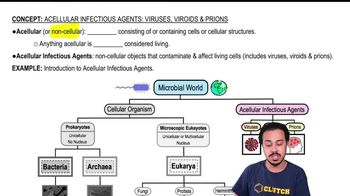
    Noncellular entities lacking cellular structure, unable to live independently, and capable of contaminating and affecting living cells.
  • Virus

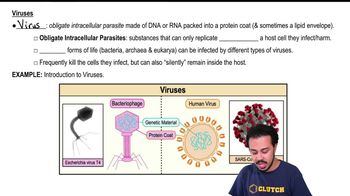
    Obligate intracellular parasite composed of DNA or RNA within a protein coat, sometimes with a lipid envelope, infecting all life forms.
  • Viroid

    Single short strand of circular RNA, lacking protein, infecting only plants and causing plant diseases.
  • Prion

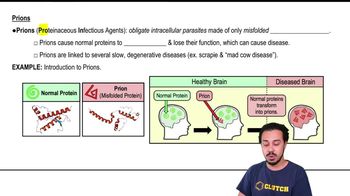
    Proteinaceous infectious agent made solely of misfolded proteins, capable of inducing misfolding in normal proteins.
  • Obligate Intracellular Parasite

    Entity that can only replicate inside a host cell, relying entirely on the host for reproduction.
  • Protein Coat

    Protective outer layer surrounding viral genetic material, essential for infecting host cells.
  • Lipid Envelope

    Membranous layer sometimes surrounding a virus's protein coat, derived from host cell membranes.
  • Genetic Material

    Nucleic acid component, either DNA or RNA, carrying instructions for replication within acellular agents.
  • Bacteriophage

    Type of virus specialized to infect and replicate within bacterial cells.
  • Misfolded Protein

    Abnormal protein structure that disrupts normal function and can propagate structural changes to other proteins.
  • Degenerative Disease

    Progressive disorder often linked to prions, characterized by gradual loss of function in affected tissues.
  • Plant Disease

    Disorder in plants caused by infectious agents like viroids, leading to symptoms such as wilting or death.
  • Proteinaceous Infectious Agent

    Disease-causing entity composed entirely of protein, lacking nucleic acids, exemplified by prions.
  • Closed Ring RNA

    Single-stranded RNA molecule forming a covalently closed loop, characteristic of viroids.
  • Cellular Organism

    Living entity composed of one or more cells, in contrast to acellular infectious agents.