Ch. 14 - Principles of Disease and Epidemiology
Tortora - Microbiology: An Introduction 14th Edition
Tortora14th EditionMicrobiology: An IntroductionISBN: 9780138200398Not the one you use?Change textbook
Chapter 14, Problem 9

This microbe is acquired by humans as infants and is essential for good health. Acquiring a closely related strain causes severe stomach cramps, bloody diarrhea, and vomiting. What is the microbe?

Verified step by step guidance
1
Identify the microbe that is commonly acquired by humans during infancy and is known to be beneficial for health. This microbe typically colonizes the gut and plays a role in digestion and immune system development.
Consider the characteristics of the closely related strain that causes severe stomach cramps, bloody diarrhea, and vomiting. These symptoms suggest a pathogenic strain that disrupts normal gut function.
Recall common examples of microbes with both beneficial and pathogenic strains affecting the human gastrointestinal tract. Pay attention to genera that include both harmless and harmful strains.
Analyze the relationship between the beneficial microbe and its pathogenic relative, focusing on how slight genetic differences can lead to vastly different health outcomes.
Conclude by naming the microbe that fits both descriptions: a beneficial strain acquired in infancy and a closely related pathogenic strain causing severe gastrointestinal symptoms.

Verified video answer for a similar problem:

This video solution was recommended by our tutors as helpful for the problem above.
Video duration:
2m
Was this helpful?

Key Concepts

Here are the essential concepts you must grasp in order to answer the question correctly.

Human Microbiota Acquisition in Infancy

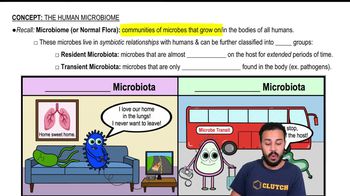
Humans acquire their microbiota primarily during infancy, which plays a crucial role in developing the immune system and maintaining health. Early colonization by beneficial microbes helps protect against pathogens and supports digestion and nutrient absorption.
Recommended video:
Guided course
03:25
The Human Microbiome

Pathogenic vs. Commensal Strains

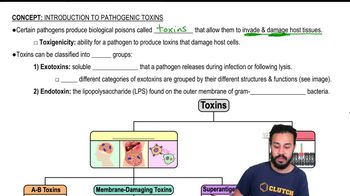
Microbes can exist as harmless commensals or harmful pathogens depending on their strain. Closely related strains may differ genetically, where one is beneficial and another causes disease symptoms like severe cramps and diarrhea, highlighting the importance of strain-specific effects.
Recommended video:
Guided course
03:40
Introduction to Pathogenic Toxins

Symptoms of Enteric Infection

Severe stomach cramps, bloody diarrhea, and vomiting are typical symptoms of enteric infections caused by pathogenic bacteria. These symptoms indicate inflammation and damage to the intestinal lining, often triggered by toxin-producing or invasive bacterial strains.
Recommended video:
Guided course
03:29
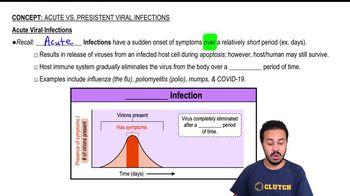
Acute Viral Infections
Related Practice
Textbook Question

An encapsulated bacterium can be virulent because the capsule

a. resists phagocytosis.

b. is an endotoxin.

c. destroys host tissues.

d. kills host cells.

e. has no effect; because many pathogens do not have capsules, capsules do not contribute to virulence.

7
views
Textbook Question

Using the following data, draw a graph showing the incidence of influenza during a typical year. Indicate the endemic and epidemic levels.

1
views
Textbook Question

Use the following information to answer questions 8–10.

A Maryland woman was hospitalized with dehydration. V. cholerae and Plesiomonas shigelloides were isolated from the patient, who had neither traveled outside the United States nor eaten raw shellfish during the preceding month. The patient had attended a party before hospitalization. Two other people at the party had acute diarrheal illness and elevated levels of serum antibodies against Vibrio. Everyone at the party ate crabs and rice pudding with coconut milk. Crabs left over from this party were served at a second party. One of the people at the second party had onset of mild diarrhea; specimens from of these people were negative for vibriocidal antibodies.

The source of the disease was

a. Plesiomonas shigelloides.

b. crabs.

c. V. cholerae.

d. coconut milk.

e. rice.

1
views
Textbook Question

Put the following in the correct order to describe the pattern of disease: period of convalescence, prodromal period, period of decline, incubation period, period of illness.

3
views
Textbook Question

Use the following information to answer questions 6–7.

On September 6, a 6-year-old boy experienced fever, chills, and vomiting. On September 7, the child was hospitalized with diarrhea and swollen lymph nodes under both arms. On September 3, he had been scratched and bitten by a cat. The cat was found dead on September 5, and Y. pestis was isolated from the cat. Chloramphenicol was administered to the child from September 7, when Y. pestis was isolated from his blood. On September 17, the child's temperature returned to normal. On September 22, the child was released from the hospital

Identify the prodromal period for this disease.

a. September 3-5

b. September 3-6

c. September 6-7

d. September 6-17

4
views
Textbook Question

Use the following information to answer questions 8–10.

A Maryland woman was hospitalized with dehydration. V. cholerae and Plesiomonas shigelloides were isolated from the patient, who had neither traveled outside the United States nor eaten raw shellfish during the preceding month. The patient had attended a party before hospitalization. Two other people at the party had acute diarrheal illness and elevated levels of serum antibodies against Vibrio. Everyone at the party ate crabs and rice pudding with coconut milk. Crabs left over from this party were served at a second party. One of the people at the second party had onset of mild diarrhea; specimens from of these people were negative for vibriocidal antibodies.

This is an example of

a. vehicle transmission.

b. airborne transmission.

c. transmission by fomites.

d. direct contact transmission.

e. healthcare-associated transmission.

1
views