Ch. 3 - Cell Structure and Function
Bauman - Microbiology with Diseases by Taxonomy 6th Edition
Bauman6th EditionMicrobiology with Diseases by TaxonomyISBN: 9780134832302Not the one you use?Change textbook
Chapter 3, Problem 7

Compare bacterial cells and algal cells, giving at least four similarities and four differences.

Verified step by step guidance
1
Step 1: Identify the basic cell type of both organisms. Bacterial cells are prokaryotic, meaning they lack a true nucleus and membrane-bound organelles, while algal cells are eukaryotic, containing a true nucleus and membrane-bound organelles.
Step 2: List similarities by focusing on common features such as the presence of a cell wall, genetic material (DNA), ribosomes for protein synthesis, and the ability to perform metabolic processes.
Step 3: List differences by comparing structural and functional aspects, such as the presence of membrane-bound organelles (e.g., chloroplasts in algae), cell size, complexity, and modes of nutrition (bacteria can be heterotrophic or autotrophic, algae are primarily photosynthetic).
Step 4: Organize the similarities and differences clearly, for example: Similarities - cell wall, DNA, ribosomes, metabolic activity; Differences - nucleus presence, organelles like chloroplasts, cell size, and nutritional modes.
Step 5: Summarize the comparison by emphasizing how these similarities and differences reflect their classification and ecological roles.

Verified video answer for a similar problem:

This video solution was recommended by our tutors as helpful for the problem above.
Video duration:
2m
Was this helpful?

Key Concepts

Here are the essential concepts you must grasp in order to answer the question correctly.

Cell Structure of Bacteria and Algae

Bacterial cells are prokaryotic, lacking a nucleus and membrane-bound organelles, while algal cells are eukaryotic with a defined nucleus and organelles like chloroplasts. Understanding these structural differences is essential to compare their cellular organization.
Recommended video:
Guided course
05:59
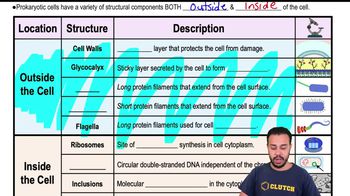
Overview of Prokaryotic Cell Structure

Photosynthesis and Pigmentation

Many algae perform photosynthesis using chlorophyll and other pigments within chloroplasts, whereas bacteria may be photosynthetic (like cyanobacteria) but lack chloroplasts. This concept helps explain functional similarities and differences in energy acquisition.
Recommended video:
Guided course
05:58
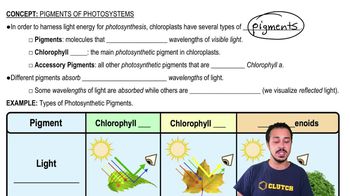
Pigments of Photosynthesis

Cell Wall Composition and Function

Bacterial cell walls are primarily made of peptidoglycan, providing rigidity and shape, while algal cell walls vary widely, often composed of cellulose, silica, or other polysaccharides. Recognizing these differences aids in understanding their protective mechanisms and taxonomy.
Recommended video:
Guided course
05:42
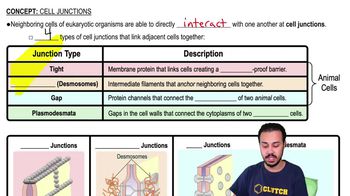
Cell Junctions