Ch. 16 - Innate Immunity: Nonspecific Defenses of the Host
Tortora - Microbiology: An Introduction 14th Edition
Tortora14th EditionMicrobiology: An IntroductionISBN: 9780138200398Not the one you use?Change textbook
Chapter 16, Problem 5

A human host can prevent a pathogen from getting enough iron by all of the following except
a. reducing dietary intake of iron.
b. binding iron with transferrin.
c. binding iron with hemoglobin.
d. binding iron with ferritin.
e. binding iron with siderophores.

Verified step by step guidance
1
Step 1: Understand the biological context of iron withholding as a host defense mechanism. The human body limits free iron availability to pathogens because iron is essential for microbial growth and metabolism.
Step 2: Review the roles of the listed molecules in iron binding: transferrin binds free iron in blood plasma, ferritin stores iron intracellularly, and hemoglobin carries oxygen in red blood cells by binding iron within heme groups.
Step 3: Recognize that siderophores are molecules secreted by bacteria (pathogens) to scavenge iron from the host environment, not a host protein that binds iron to prevent pathogen access.
Step 4: Analyze each option to determine which one does not represent a host strategy to limit iron availability to pathogens. The host reduces dietary iron intake, uses transferrin, ferritin, and hemoglobin to sequester iron, but does not use siderophores for this purpose.
Step 5: Conclude that the correct answer is the option involving siderophores, as they are microbial iron-binding molecules, not a host defense mechanism.

Verified video answer for a similar problem:

This video solution was recommended by our tutors as helpful for the problem above.
Video duration:
1m
Was this helpful?

Key Concepts

Here are the essential concepts you must grasp in order to answer the question correctly.

Iron Sequestration in Host Defense

The human body limits pathogen growth by restricting free iron availability, a process called nutritional immunity. Proteins like transferrin and ferritin bind iron tightly, reducing its accessibility to microbes and thus inhibiting their proliferation.
Recommended video:
Guided course
01:59
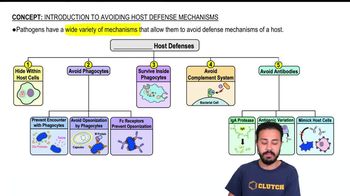
Introduction to Avoiding Host Defense Mechanisms

Role of Iron-Binding Proteins

Transferrin transports iron in the blood, ferritin stores iron intracellularly, and hemoglobin carries oxygen bound to iron in red blood cells. These proteins help sequester iron, making it less available to invading pathogens.
Recommended video:

Siderophores and Microbial Iron Acquisition

Siderophores are molecules secreted by bacteria to scavenge iron from the host environment. Unlike host proteins, siderophores bind iron to facilitate microbial uptake, thus promoting pathogen survival rather than restricting iron availability.
Recommended video:
Guided course
05:48
Categorizing Life Based on Energy Acquisition