Skip to main content
Macroeconomics
My Course
Learn
Exam Prep
AI Tutor
Study Guides
Flashcards
Explore
Try the app
My Course
Learn
Exam Prep
AI Tutor
Study Guides
Flashcards
Explore
Try the app
Back
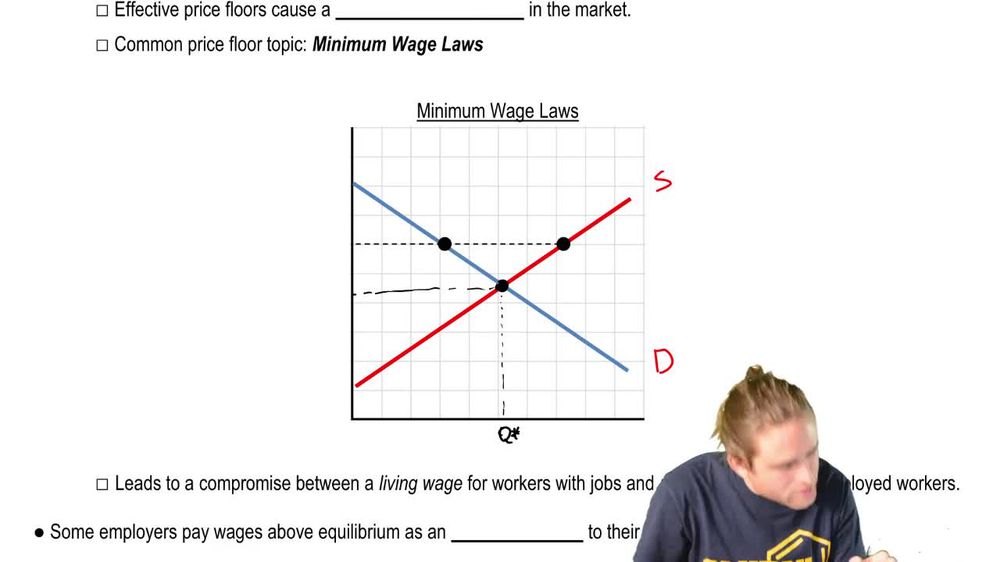
Unemployment: Minimum Wage Laws and Efficiency Wages definitions
You can tap to flip the card.
Minimum Wage
You can tap to flip the card.
👆
Minimum Wage
A legally set lowest hourly pay that must be above the market rate to impact employment and labor supply.
Track progress
Control buttons has been changed to "navigation" mode.
1/14
Related flashcards
Related practice
Recommended videos
Unemployment: Minimum Wage Laws and Efficiency Wages quiz #1
Unemployment: Minimum Wage Laws and Efficiency Wages
10 Terms
Unemployment: Minimum Wage Laws and Efficiency Wages
11. Unemployment and Inflation
10 problems
Topic
12. Unemployment and Inflation
8 topics
11 problems
Chapter
Guided course
02:18
Unemployment: Efficiency Wages
2
views
Guided course
04:58
Unemployment: Minimum Wage Laws
4
views
Terms in this set (14)
Hide definitions
Minimum Wage
A legally set lowest hourly pay that must be above the market rate to impact employment and labor supply.
Price Floor
A government-imposed lower limit on price, preventing transactions below a specified level in a market.
Equilibrium Wage
The pay rate where labor supply matches labor demand, resulting in no inherent surplus or shortage.
Labor Market
The arena where employers seek workers and individuals offer their labor, determining wages and employment.
Labor Supply
The total number of workers willing to work at various wage levels in a given market.
Labor Demand
The quantity of workers that firms are willing to hire at different wage rates.
Surplus of Labor
A situation where more people seek jobs than there are positions available, often due to wage floors.
Unemployment
The condition where individuals are willing to work at the current wage but cannot find jobs.
Living Wage
A pay level considered sufficient for workers to afford basic living expenses.
Efficiency Wage
A pay rate above market equilibrium used by employers to boost worker performance and retention.
Worker Turnover
The rate at which employees leave and must be replaced, affecting training and efficiency costs.
Opportunity Cost
The value of the next best alternative forgone, such as accepting a lower-paying job after job loss.
Worker Quality
The overall skill, reliability, and productivity of employees attracted to a job.
Worker Effort
The level of motivation and diligence employees exhibit, often influenced by wage incentives.
 BackBack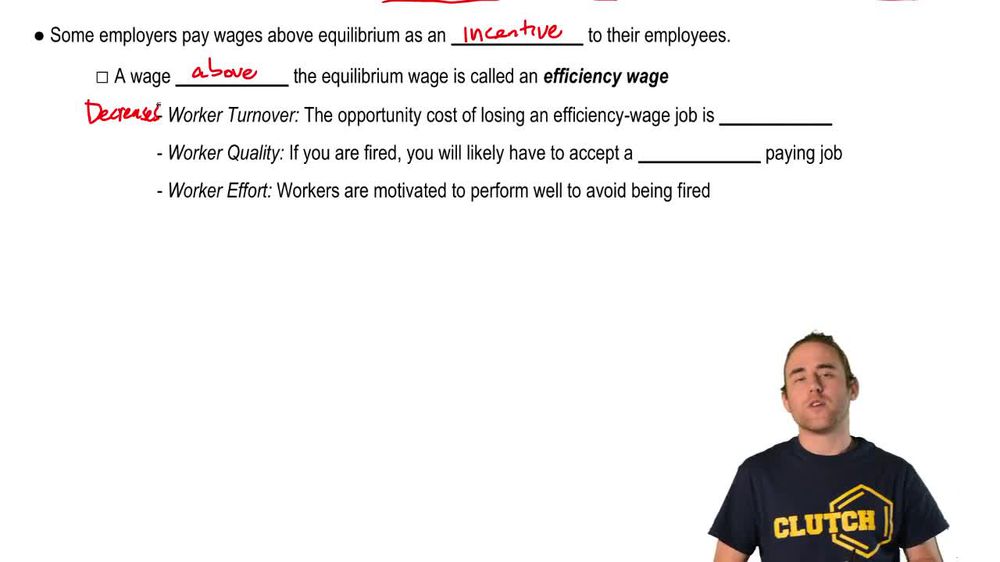
 02:18
02:18