Back

One-Time Games and the Prisoner's Dilemma definitions

Control buttons has been changed to "navigation" mode.
1/14
  • Game Theory

    Analysis of strategic interactions where outcomes depend on the choices of all involved participants.
  • Oligopoly

    Market structure with few firms, where each firm's decisions significantly impact competitors.
  • One-Time Game

    Situation played only once, with no opportunity for future retaliation or cooperation.
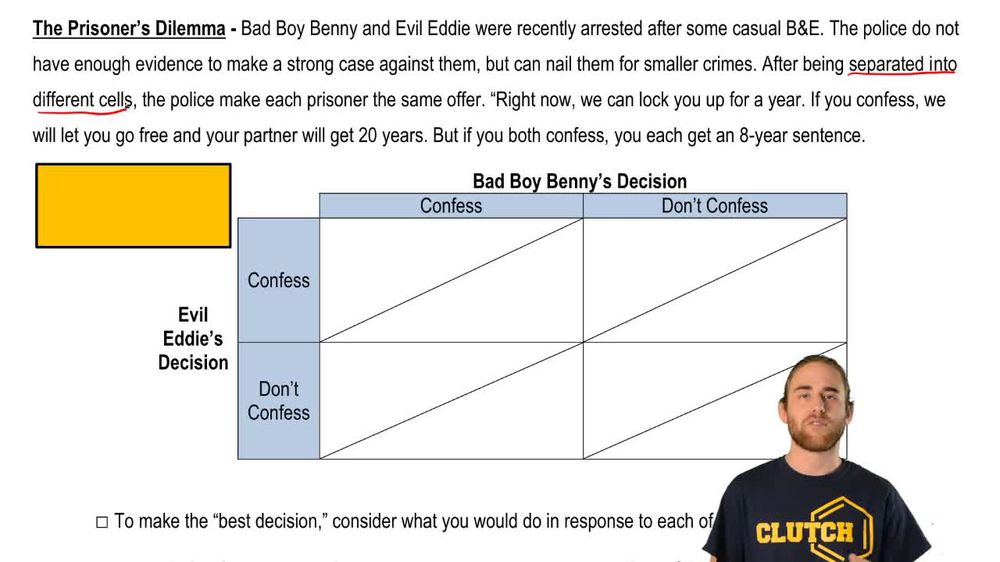
  • Prisoner's Dilemma

    Scenario illustrating why rational individuals might not cooperate, even if it benefits both.
  • Payoff Matrix

    Table displaying possible outcomes for each player based on all combinations of strategies.
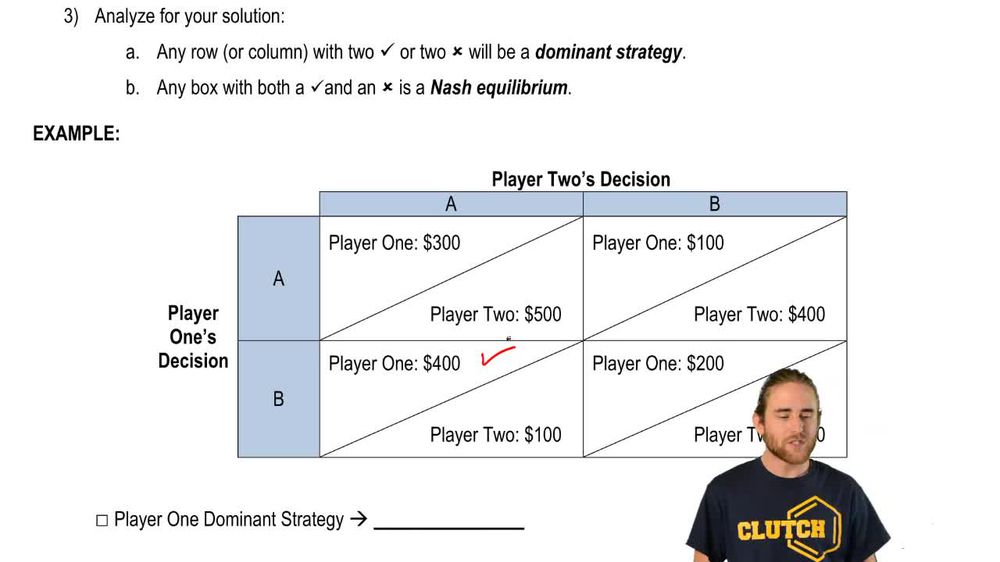
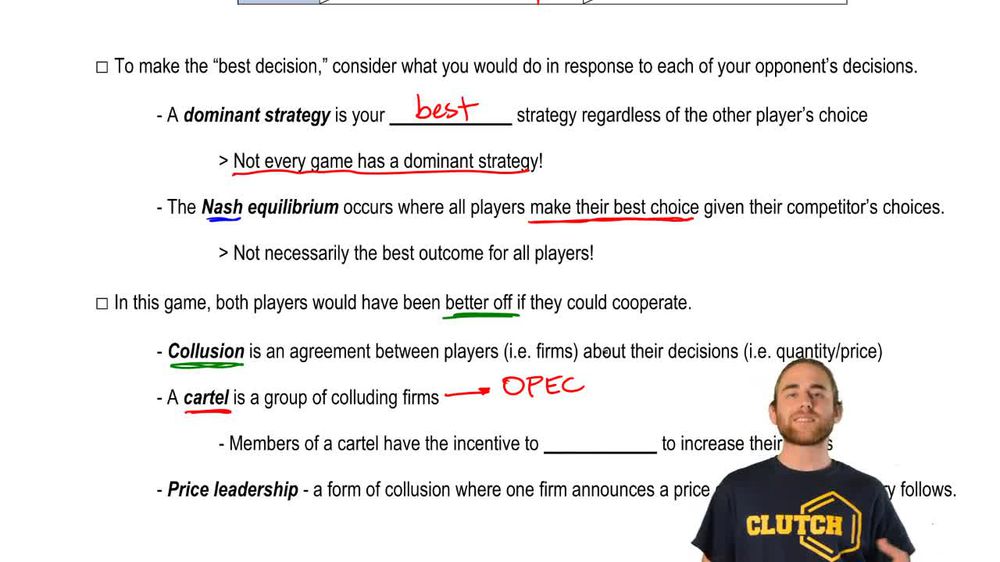
  • Dominant Strategy

    Option yielding the best result for a player, regardless of the other participant's choice.
  • Nash Equilibrium

    Outcome where all players choose their best possible action, given the choices of others.
  • Collusion

    Agreement among firms to coordinate actions, such as setting prices or output, often illegally.
  • Cartel

    Group of firms acting together to control prices or output, like OPEC in the oil market.
  • Implicit Collusion

    Unspoken coordination among firms, often through price leadership, without formal agreements.
  • Price Leadership

    Practice where one firm sets a price and others in the market follow, influencing overall pricing.
  • Incentive to Cheat

    Temptation for a participant to break a cooperative agreement to increase individual benefit.
  • Strategic Interaction

    Situation where each participant's outcome depends on the actions of others.
  • Check and X Method

    Technique for identifying dominant strategies and Nash equilibria in payoff matrices using marks.