Back

Factors of Production definitions

Control buttons has been changed to "navigation" mode.
1/15
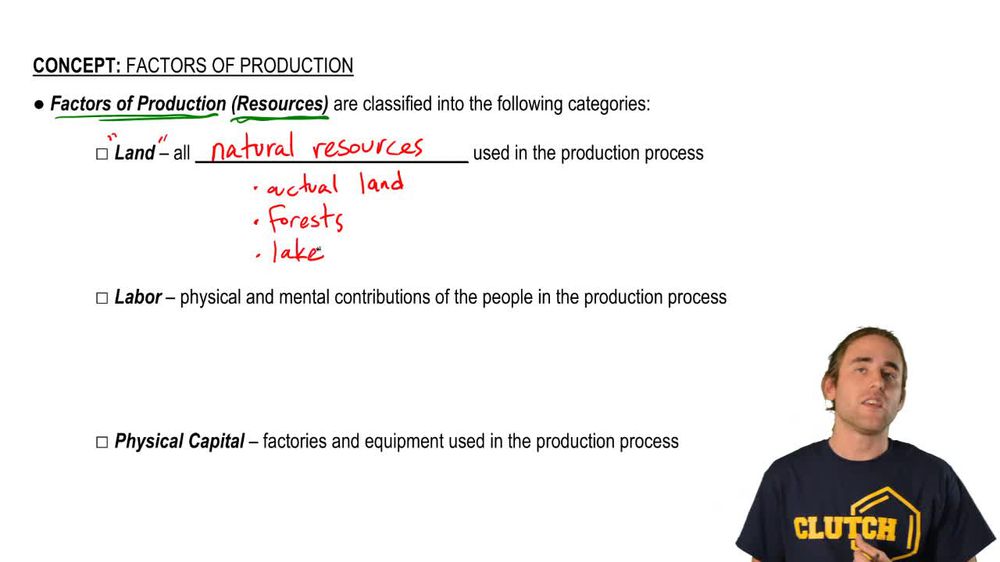
  • Factors of Production

    Categories of resources including land, labor, physical capital, human capital, and entrepreneurship used in creating goods and services.
  • Land

    All natural resources utilized in production, such as forests, lakes, wind, and sunlight, not just physical ground.
  • Labor

    Physical and mental contributions of individuals, from tutors to fry cooks, essential for the production process.
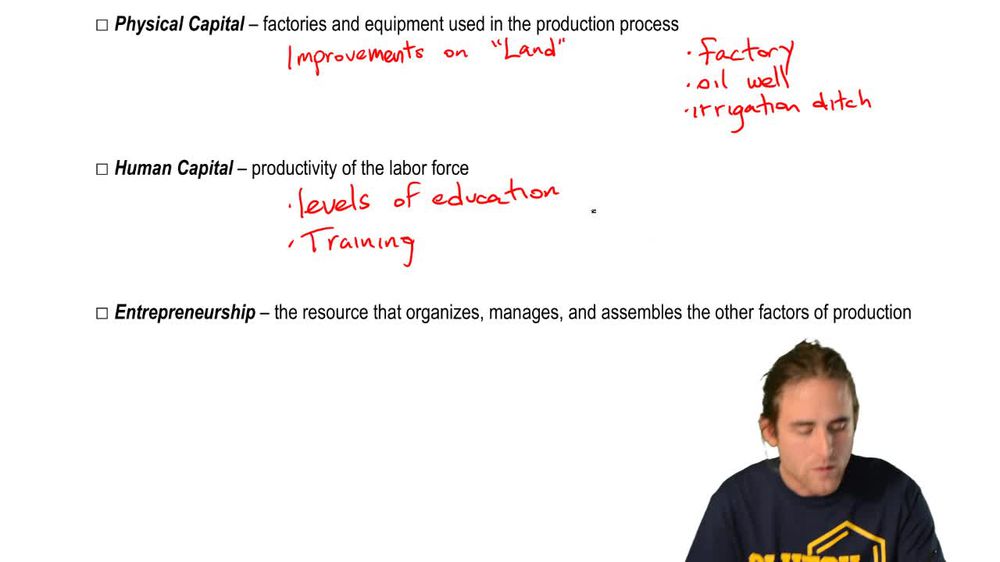
  • Physical Capital

    Man-made improvements on land like factories, equipment, oil wells, and irrigation ditches that aid production.
  • Human Capital

    Productivity of the workforce, enhanced by education and training, leading to greater efficiency in production.
  • Entrepreneurship

    Resource responsible for organizing, managing, and innovating with other resources, while embracing risk.
  • Natural Resources

    Elements from the environment, including wind and sunlight, that are harnessed for use in production.
  • Innovation

    Introduction of new ideas or methods that significantly improve the production process and efficiency.
  • Risk Taking

    Willingness to face uncertainty in organizing resources, crucial for expanding and improving production.
  • Productivity

    Measure of output generated by labor or capital, often increased through education and training.
  • Education

    Acquisition of knowledge and skills that boosts the effectiveness and output of the workforce.
  • Training

    Process of developing specific skills that enhance the productivity and value of workers.
  • Equipment

    Tools and machinery, such as those found in factories, that are used to facilitate production.
  • Factory

    Physical structure built on land where goods are manufactured, representing a form of physical capital.
  • Resource

    Any input, tangible or intangible, that is used in the creation of goods and services.