Back

Elasticity and Taxes quiz

Control buttons has been changed to "navigation" mode.
1/15
  • What determines how the tax burden is split between consumers and producers?

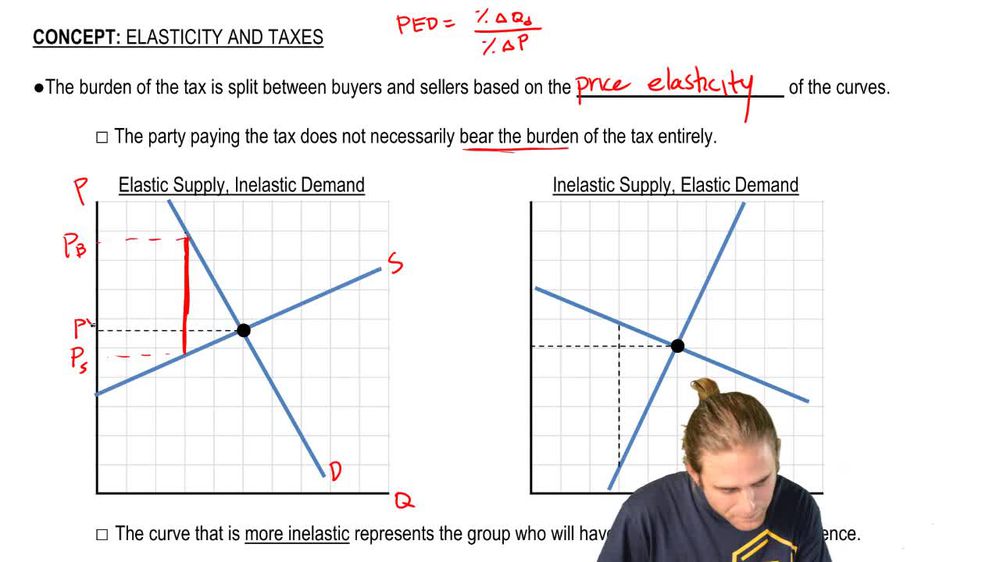
    The tax burden is split based on the price elasticity of demand and supply; the more inelastic side bears more of the tax.
  • How does the price elasticity of demand affect the shape of the demand curve?

    A more elastic demand curve is flatter, while a more inelastic demand curve is steeper.
  • In a market with elastic supply and inelastic demand, who bears more of the tax burden?

    Consumers bear more of the tax burden because their demand is more inelastic.
  • If supply is inelastic and demand is elastic, who pays more of the tax?

    Sellers pay more of the tax because the supply is more inelastic.
  • What happens to the tax burden when both demand and supply are equally elastic or inelastic?

    The tax burden is shared more evenly, but the side that is slightly more inelastic still pays more.
  • Why does the more inelastic side of the market bear a higher tax incidence?

    Because their quantity demanded or supplied does not change much with price, so they cannot avoid the tax.
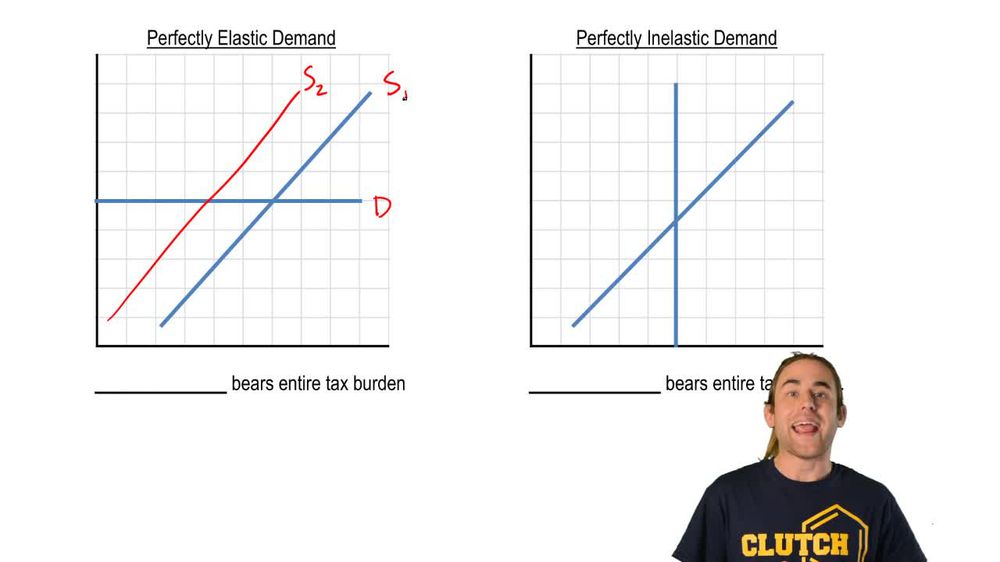
  • What is the effect of a perfectly elastic demand curve on tax incidence?

    Suppliers bear the entire tax burden because consumers will not buy at a higher price.
  • What is the effect of a perfectly inelastic demand curve on tax incidence?

    Consumers bear the entire tax burden because they will buy the same amount regardless of price.
  • How does a tax affect the prices paid by buyers and received by sellers?

    A tax creates a wedge between the price buyers pay (higher) and the price sellers receive (lower).
  • What is the general rule for determining who bears more of a tax?

    The side of the market that is more inelastic bears more of the tax burden.
  • Why might consumers have inelastic demand for certain goods?

    Consumers have inelastic demand for necessities or addictive goods, where they cannot easily reduce quantity demanded even if price rises.
  • What happens if the supplier tries to pass a tax onto consumers when demand is perfectly elastic?

    Consumers will stop buying the product entirely if the price increases, so suppliers must absorb the tax.
  • What happens to the price received by sellers when demand is perfectly elastic and a tax is imposed?

    The price received by sellers decreases by the full amount of the tax.
  • What happens to the price paid by buyers when demand is perfectly inelastic and a tax is imposed?

    The price paid by buyers increases by the full amount of the tax.
  • How does elasticity explain why some groups can avoid taxes more easily than others?

    Groups with more elastic demand or supply can avoid taxes by reducing quantity, while inelastic groups cannot and thus bear more of the tax.