What does the dynamic AD-AS model assume about the movement of aggregate supply and demand over time?
It assumes year-over-year increases in long run aggregate supply, short run aggregate supply, and aggregate demand, reflecting general economic growth.
When is expansionary fiscal policy used in the dynamic AD-AS model?
It is used during a recession when real GDP is below potential GDP to boost aggregate demand and achieve long run equilibrium.
How does the government implement expansionary fiscal policy?
The government increases spending and/or cuts taxes to raise aggregate demand.
What is the goal of expansionary fiscal policy in the dynamic AD-AS model?
The goal is to increase aggregate demand so it aligns with the increased long run and short run aggregate supply, reaching a new long run equilibrium.
What happens to aggregate demand during a recession in the dynamic AD-AS model?
Aggregate demand falls short of the new potential GDP, requiring government intervention to boost it.
How does expansionary fiscal policy affect the aggregate demand curve?
It shifts the aggregate demand curve rightward, moving the economy toward long run equilibrium.
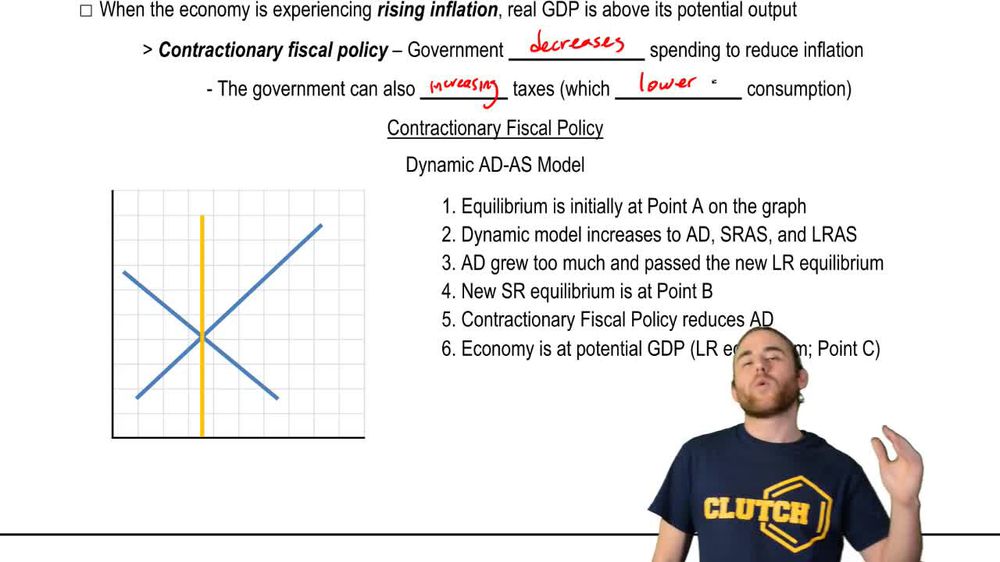
What is contractionary fiscal policy used for in the dynamic AD-AS model?
It is used when aggregate demand exceeds potential GDP, causing inflation, to reduce aggregate demand and stabilize prices.
How does the government implement contractionary fiscal policy?
The government decreases spending and/or increases taxes to lower aggregate demand.
What is the goal of contractionary fiscal policy?
The goal is to reduce aggregate demand so it aligns with the increased long run and short run aggregate supply, stabilizing prices at a new equilibrium.
What happens to aggregate demand during inflation in the dynamic AD-AS model?
Aggregate demand grows too much, surpassing potential GDP and causing higher prices.
How does contractionary fiscal policy affect the aggregate demand curve?
It shifts the aggregate demand curve leftward, bringing it back in line with potential GDP.
What is the effect of increasing taxes in contractionary fiscal policy?
Increasing taxes lowers consumption, which reduces aggregate demand.
What is the effect of cutting taxes in expansionary fiscal policy?
Cutting taxes increases consumption, which raises aggregate demand.
What is the main purpose of fiscal policy in the dynamic AD-AS model?
The main purpose is to adjust aggregate demand to stabilize the economy at its potential GDP, combating recession or inflation.
How are expansionary and contractionary fiscal policies related in the dynamic AD-AS model?
They are opposites; expansionary policy increases aggregate demand to fight recession, while contractionary policy decreases aggregate demand to fight inflation.
 Back
Back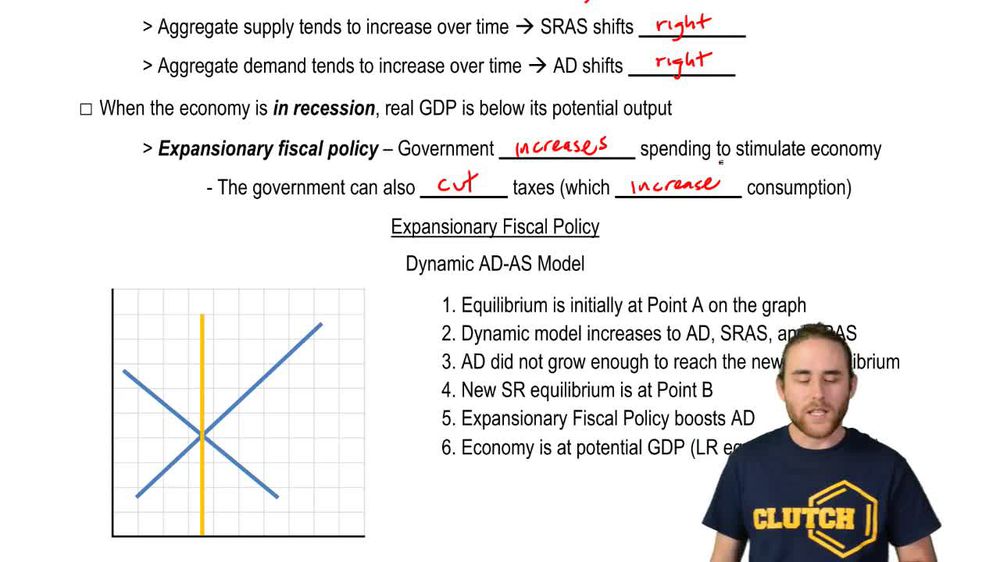
 05:25
05:25