What was the Volcker disinflation and its economic effects?
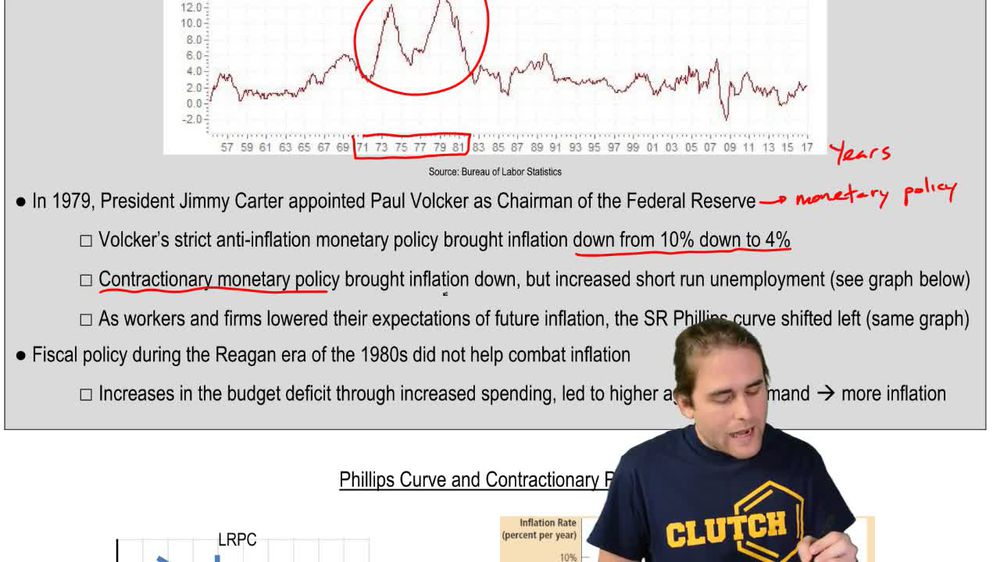
The Volcker disinflation refers to the period in the late 1970s and early 1980s when Federal Reserve Chairman Paul Volcker used strict contractionary monetary policy to significantly reduce the U.S. inflation rate from around 10% to 4%. This policy lowered inflation but caused a sharp increase in short-run unemployment, as shown by movement along the Phillips Curve. In the long run, lower inflation expectations shifted the Short Run Phillips Curve to the left, stabilizing inflation at a lower rate and returning unemployment to its natural rate.
 Back
Back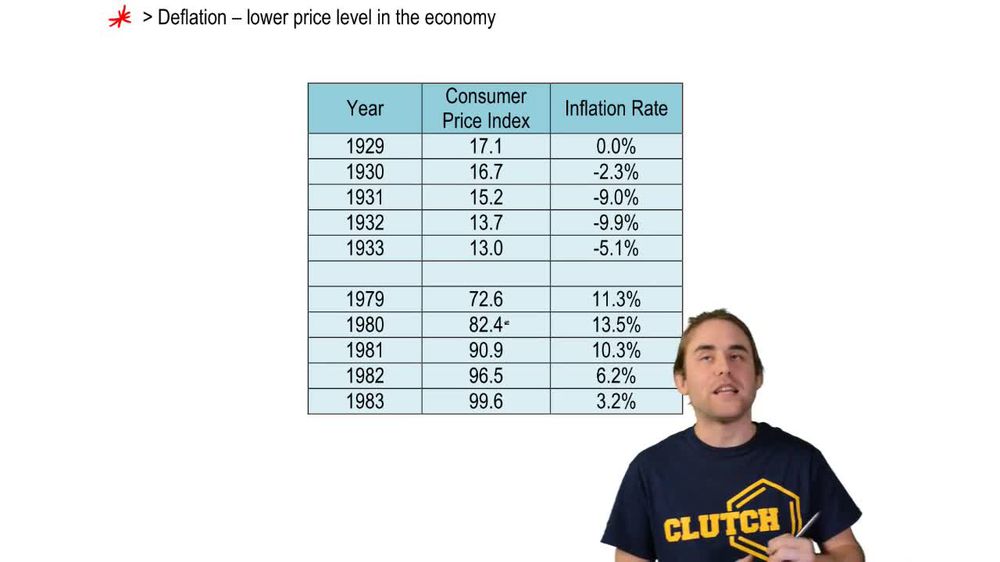
 02:29
02:29