The recognition lag is the time it takes to identify that the economy is in a recession, which can be 4 to 6 months or longer.
What is the operational lag in fiscal policy?
The operational lag is the delay between the approval of fiscal policy and its actual impact on the economy, often due to the time needed to implement government spending or tax changes.
Why can fiscal policy be less effective than monetary policy in terms of timing?
Fiscal policy has longer recognition and operational lags compared to monetary policy, making it slower to respond to economic changes.
How can political motivations affect fiscal policy decisions?
Politicians may support fiscal policies that help them get reelected, such as increasing spending or cutting taxes, even if those policies are not economically optimal.
What is a policy reversal in the context of fiscal policy?
A policy reversal occurs when a new government undoes previous fiscal policies, such as reversing tax cuts, which can make current policies less effective if people expect them to be temporary.
How do expectations of temporary fiscal policies affect consumer behavior?
If consumers believe tax cuts or spending increases are temporary, they may save rather than spend the extra income, reducing the policy's intended stimulative effect.
What is procyclical fiscal policy at the state and local government level?
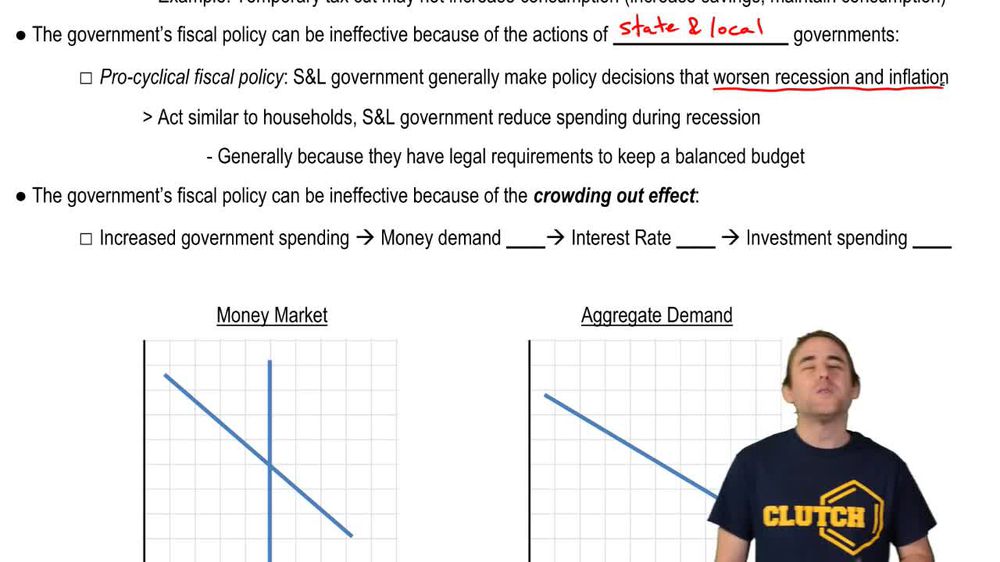
Procyclical fiscal policy occurs when state and local governments reduce spending during recessions, which can worsen economic downturns.
Why are state and local governments more likely to engage in procyclical fiscal policy?
State and local governments often have legal requirements to maintain balanced budgets, forcing them to cut spending when tax revenues fall during recessions.
How does reduced state and local government spending during a recession affect the economy?
It can exacerbate the recession by further decreasing aggregate demand when the economy is already weak.
What is the crowding out effect in fiscal policy?
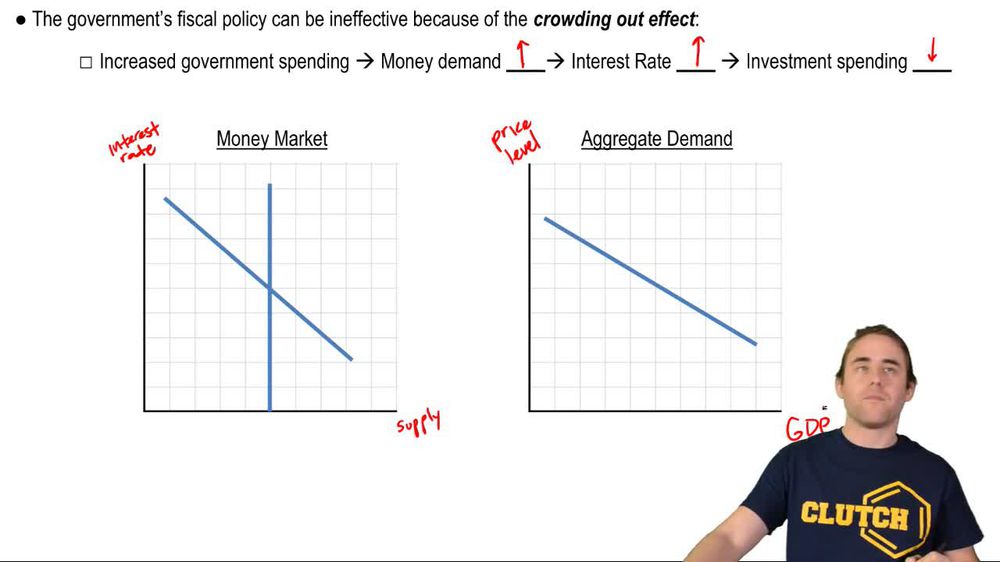
The crowding out effect occurs when increased government borrowing raises interest rates, which reduces private investment spending.
How does increased government spending lead to higher interest rates?
Increased government spending raises the demand for money, which, with a fixed money supply, leads to higher interest rates.
Why does higher interest rates from government borrowing reduce investment?
Higher interest rates make borrowing more expensive for firms, so they are less likely to invest in new projects or equipment.
How does the crowding out effect impact long-run economic growth?
By reducing investment spending, the crowding out effect can lead to less capital formation and slower long-run economic growth.
What role does investment spending play in long-run economic growth?
Investment spending funds the creation of factories, equipment, and technology, which are essential for increasing future productivity and growth.
How can fiscal policy intended to increase aggregate demand be offset by the crowding out effect?
While government spending increases aggregate demand, the resulting higher interest rates can decrease investment, partially offsetting the initial increase in demand.
 Back
Back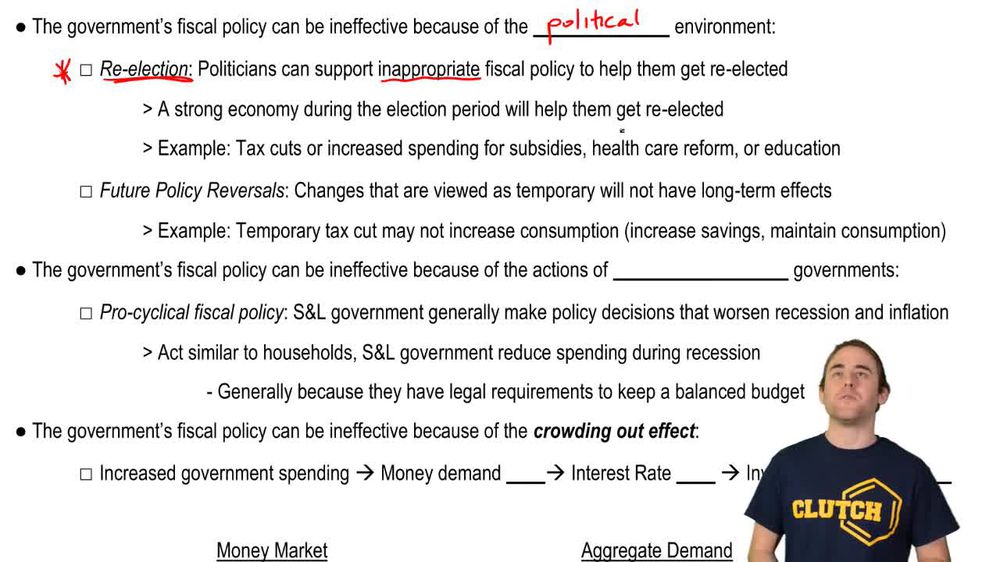
 02:19
02:19