What is protectionism in the context of international trade?
Protectionism is the practice of protecting domestic industries from foreign competition, often through tariffs or other trade barriers.
How does the jobs argument oppose international trade?
The jobs argument claims that international trade causes job losses in certain industries, but in reality, jobs shift to industries where the country has a comparative advantage.
What economic principle explains why jobs shift rather than disappear with international trade?
The principle of comparative advantage explains that jobs move to industries where a country is more efficient, rather than being lost entirely.
What is the main concern of the national security argument against international trade?
The national security argument worries that trading key resources could empower potential enemies, but it's difficult to determine what truly poses a security risk.
Why is it challenging to apply the national security argument in practice?
It's hard to draw the line between what is and isn't a security risk, as many goods have both civilian and military uses.
What does the infant industry argument claim?
The infant industry argument claims that new domestic industries need protection from foreign competition until they become established.
Why is government speculation a problem in the infant industry argument?
Government speculation is problematic because it requires the government to pick which industries will succeed, a role it's not well-suited for.
How does the unfair competition argument criticize international trade?
The unfair competition argument claims that foreign government subsidies give other countries an advantage, but these subsidies often benefit domestic consumers through lower prices.
Why do consumer benefits often outweigh producer losses in the context of unfair competition?
Because lower prices from subsidized imports increase total surplus, benefiting consumers more than the losses experienced by domestic producers.
What is meant by using protection as a bargaining chip in trade negotiations?
It refers to threatening or imposing trade barriers to gain leverage in negotiations, but this strategy doesn't always work and can backfire politically.
What risk does a country face when using protection as a bargaining chip?
The country risks losing political credibility if the threat is not effective or if the other country calls their bluff.
List one benefit of international trade related to consumer choice.
International trade increases the variety of goods available to consumers.
How does international trade lead to lower costs for consumers?
Trade allows for economies of scale, where increased production lowers the average cost of goods.
In what way does international trade enhance competition?
It increases competition among producers, which leads to greater efficiency and lower prices.
How does international trade contribute to the flow of ideas?
Trade facilitates the exchange of technology and information, spreading new ideas and innovations across countries.
 Back
Back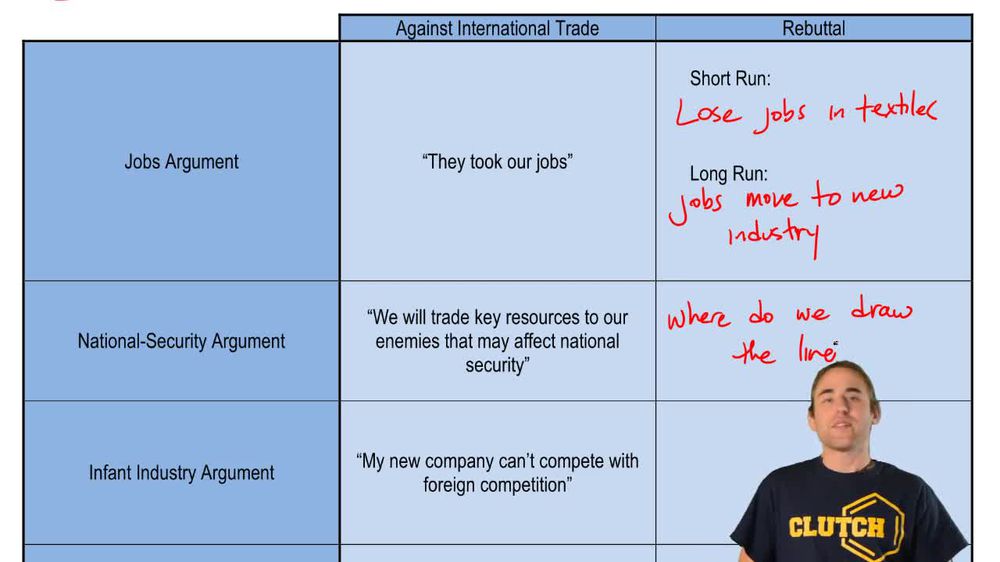
 07:50
07:50