Skip to main content
Macroeconomics
My Course
Learn
Exam Prep
AI Tutor
Study Guides
Flashcards
Explore
Try the app
My Course
Learn
Exam Prep
AI Tutor
Study Guides
Flashcards
Explore
Try the app
Back
Advertising definitions
You can tap to flip the card.
Monopolistic Competition
You can tap to flip the card.
👆
Monopolistic Competition
A market structure where many firms sell differentiated products, each with some control over price due to unique features or branding.
Track progress
Control buttons has been changed to "navigation" mode.
1/14
Related flashcards
Recommended videos
Advertising quiz
Advertising
15 Terms
Guided course
04:52
The Role of Advertising
1
views
Terms in this set (14)
Hide definitions
Monopolistic Competition
A market structure where many firms sell differentiated products, each with some control over price due to unique features or branding.
Product Differentiation
A strategy where firms make their offerings distinct through features, branding, or advertising to attract specific consumer preferences.
Aggregate Demand
The total quantity of goods and services demanded across all levels of an economy at various price levels, influenced by consumer behavior.
Brand Loyalty
A consumer's consistent preference for a specific brand, often resulting from perceived quality and emotional connection fostered by marketing.
Psychological Appeal
A marketing tactic that targets emotions or lifestyle aspirations rather than providing factual product information.
Informational Advertising
A promotional approach focused on delivering factual details such as price, features, or availability to potential buyers.
Brand Name
A unique identifier for a product that signals consistent quality and helps build consumer trust and recognition.
Reputation
The collective perception of a firm's reliability and quality, shaped by consistent product performance and marketing efforts.
Signaling
An action, such as investing in advertising, that conveys information about product quality to consumers without direct claims.
Consumer Preferences
The tastes and priorities that guide individual choices among competing products, shaped by marketing and personal experience.
Demand Shock
A sudden change in consumer demand for goods or services, often triggered by external influences like advertising.
Firm Strategy
A company's plan for competing in the market, including decisions on advertising, product features, and pricing.
Quality Assurance
The expectation of consistent product standards, often reinforced by branding and advertising investments.
Marketing
The set of activities, including advertising and branding, aimed at influencing consumer choices and increasing sales.
 BackBack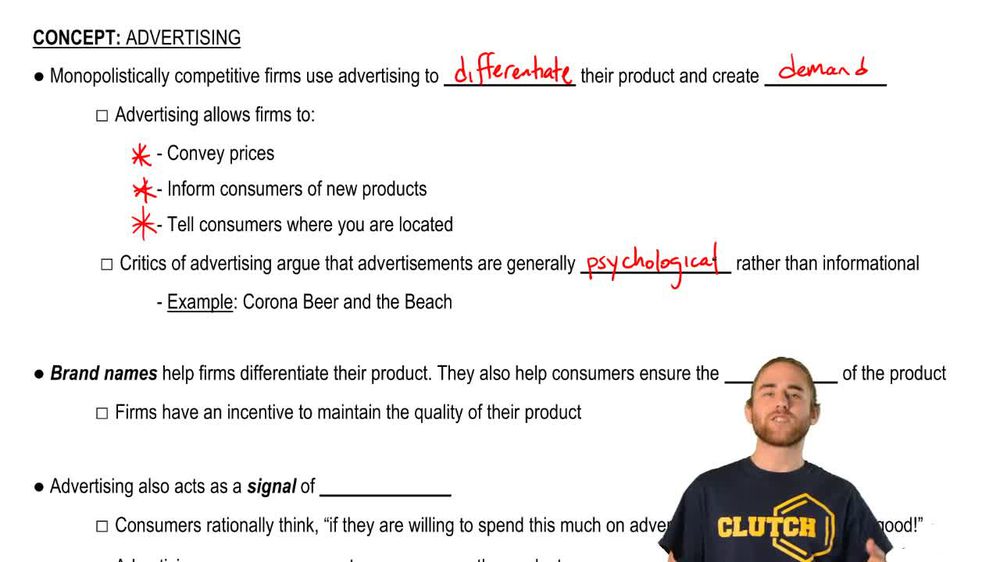
 04:52
04:52