Skip to main content
Introduction to Chemistry
My Course
Learn
Exam Prep
AI Tutor
Study Guides
Flashcards
Explore
Try the app
My Course
Learn
Exam Prep
AI Tutor
Study Guides
Flashcards
Explore
Try the app
Back
Chemical Properties definitions
You can tap to flip the card.
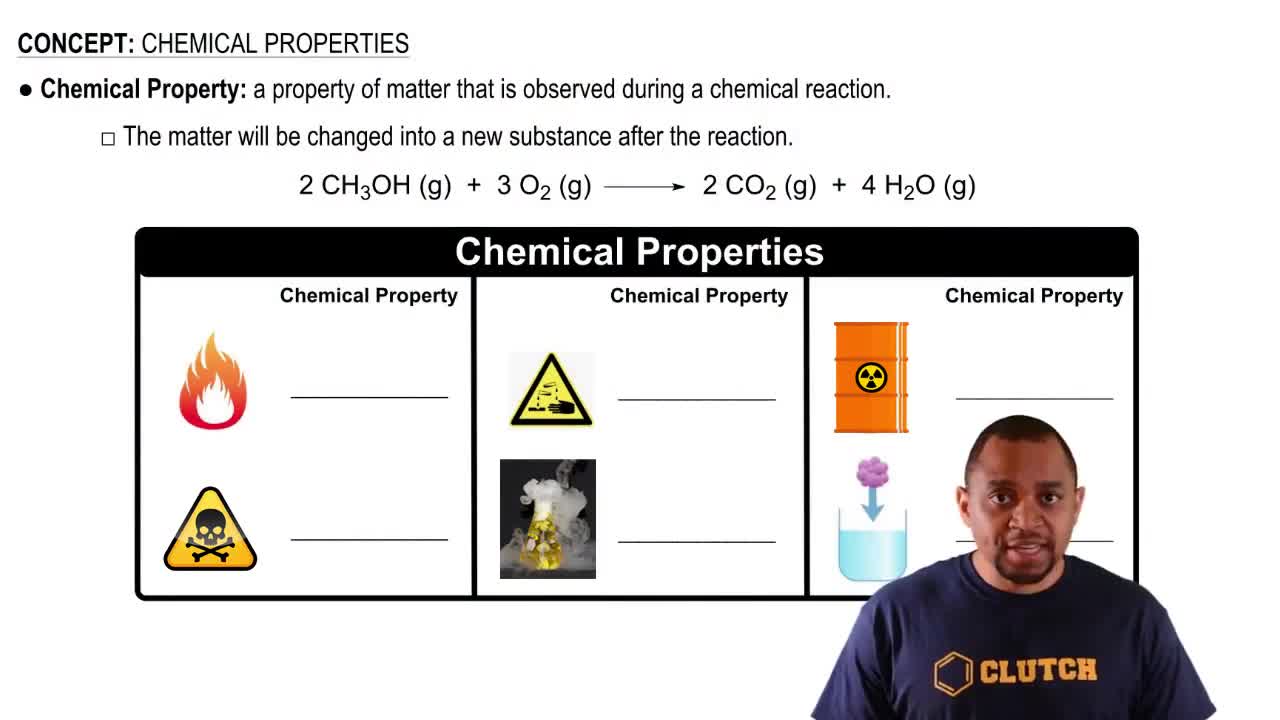
Chemical Property
You can tap to flip the card.
👆
Chemical Property
Observed only during a chemical reaction, indicating a substance's ability to change into a different substance with new composition.
Track progress
Control buttons has been changed to "navigation" mode.
1/13
Related flashcards
Related practice
Recommended videos
Chemical Properties quiz #1
Chemical Properties
13 Terms
Chemical Properties
3. Matter and Energy
5 problems
Topic
Physical Properties
3. Matter and Energy
5 problems
Topic
3. Matter and Energy - Part 1 of 2
12 topics
36 problems
Chapter
3. Matter and Energy - Part 2 of 2
1 topic
3 problems
Chapter
Guided course
02:17
Chemical Properties Example 1
292
views
5
rank
Guided course
04:22
Chemical Properties Concept
549
views
2
rank
Terms in this set (13)
Hide definitions
Chemical Property
Observed only during a chemical reaction, indicating a substance's ability to change into a different substance with new composition.
Chemical Reaction
A process where substances interact to form new substances with altered composition and identity.
Reactant
A starting material present before a chemical reaction, which undergoes transformation.
Product
A substance formed as a result of a chemical reaction, differing in composition from the starting materials.
Flammability
Describes how easily a material can ignite and sustain combustion when exposed to a flame.
Toxicity
Indicates the potential of a substance to cause harm or adverse effects to living organisms.
Corrosiveness
Describes the ability of a substance to break down or destroy materials it contacts, often through chemical action.
Reactivity
Represents the tendency of a substance to undergo chemical changes, often signaled by visible effects like bubbles or color shifts.
Radioactivity
Refers to the emission of energy or particles from unstable atomic nuclei, often marked by a specific warning symbol.
Solubility
Relates to how well a solid dissolves in a liquid, affecting the extent to which it is broken down by the solvent.
Chemical Change
An irreversible process where the composition and identity of matter are permanently altered.
Composition
The specific arrangement and types of atoms or molecules that make up a substance.
Identity
The unique set of characteristics that define a substance, which can be altered during chemical reactions.
 BackBack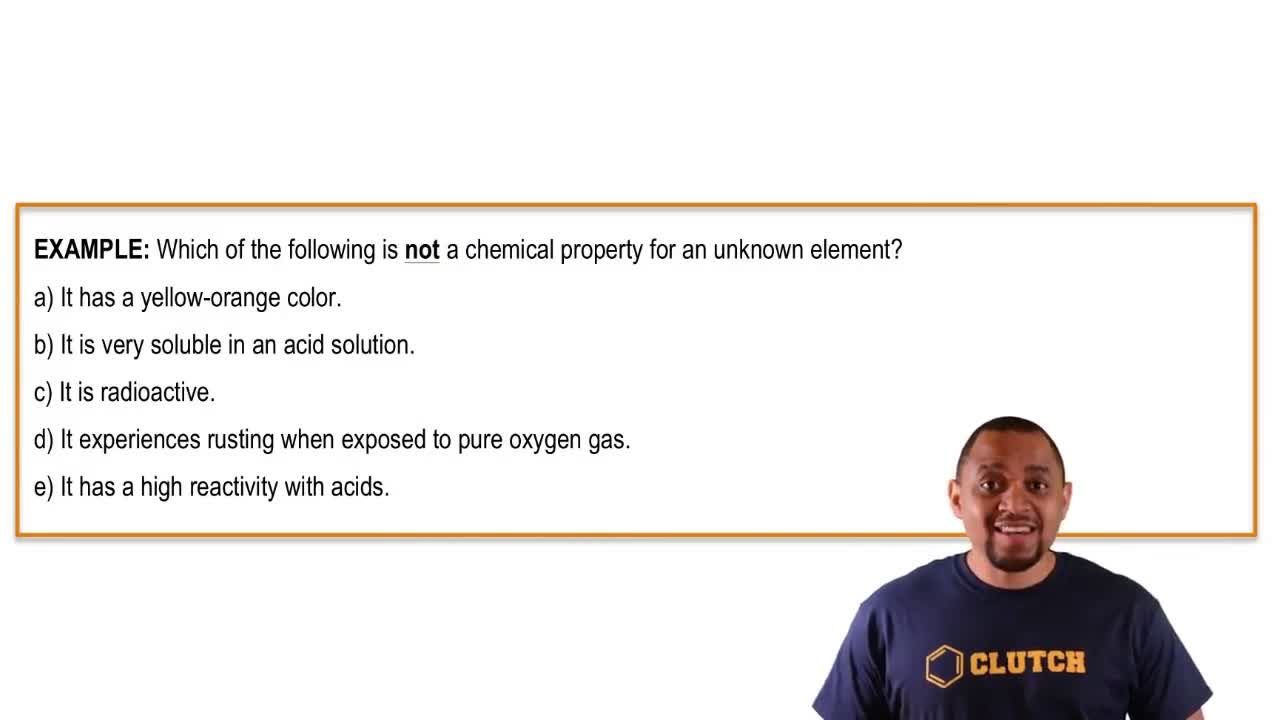
 02:17
02:17