Skip to main content
GOB Chemistry
My Course
Learn
Exam Prep
AI Tutor
Study Guides
Textbook Solutions
Flashcards
Explore
Try the app
My Course
Learn
Exam Prep
AI Tutor
Study Guides
Textbook Solutions
Flashcards
Explore
Try the app
Back
test flashcard
You can tap to flip the card.
Balance the equation: CuO + CO → Cu + CO2
You can tap to flip the card.
👆
Balance the equation: CuO + CO → Cu + CO2
Balanced as 1 CuO + 1 CO → 1 Cu + 1 CO2.
Track progress
Control buttons has been changed to "navigation" mode.
1/16
Recommended videos
Guided course
00:34
Molecular Models Example 1
7
views
Guided course
01:10
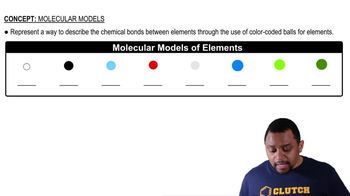
Molecular Models Concept 1
5
views
1
rank
Terms in this set (16)
Hide definitions
Balance the equation: CuO + CO → Cu + CO2
Balanced as 1 CuO + 1 CO → 1 Cu + 1 CO2.
Balance the equation: Na3N + H2O → NaOH + NH3
Balanced as 1 Na3N + 3 H2O → 3 NaOH + 2 NH3.
Balance the equation: SeO2 + O2 → SeO3
Balanced as 4 SeO2 + 2 O2 → 4 SeO3.
Identify the reducing agent in Zn + 2 H+ → Zn2+ + H2
The reducing agent is
Zn
.
Identify the oxidizing agent in Zn + 2 H+ → Zn2+ + H2
The oxidizing agent is
H+
.
Balanced equation for copper extraction from CuO by aluminum
3 CuO + 2 Al → 3 Cu + Al2O3.
Manganese compound with lowest oxidation state
MnCl2 contains manganese in its lowest oxidation state.
Net ionic equation for precipitation of chromium(III) hydroxide
Cr3+(aq) + 3 OH–(aq) → Cr(OH)3(s).
Limiting reactant in reaction of HCl with MnO2
MnO2 is the limiting reactant.
Theoretical yield of Cl2 from 95.50 g MnO2 and 114.33 g HCl
Theoretical yield is 56.39 g of Cl2.
Actual yield of Cl2 if percent yield is 76.3%
Actual yield is 42.65 g of Cl2.
Limiting reagent when 100 g nitrobenzene reacts with 100 g nitric acid
Nitric acid is the limiting reagent.
Calculate moles in 15.0 g of Compound I (C, H, O, F model)
Compound I has 0.214 moles.
Calculate moles in 15.0 g of Compound II (C, H, O, F model)
Compound II has 0.288 moles.
Reaction of silver with hot concentrated nitric acid
Ag + 2 HNO3 → AgNO3 + NO2 + H2O.
Is 40.0 g of HNO3 enough to dissolve 30.0 g of Ag?
Yes, 40.0 g HNO3 can dissolve up to about 34.2 g of Ag.
 BackBack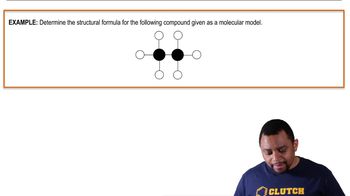
 00:34
00:34