Back

States of Matter definitions

Control buttons has been changed to "navigation" mode.
1/13
  • Solid

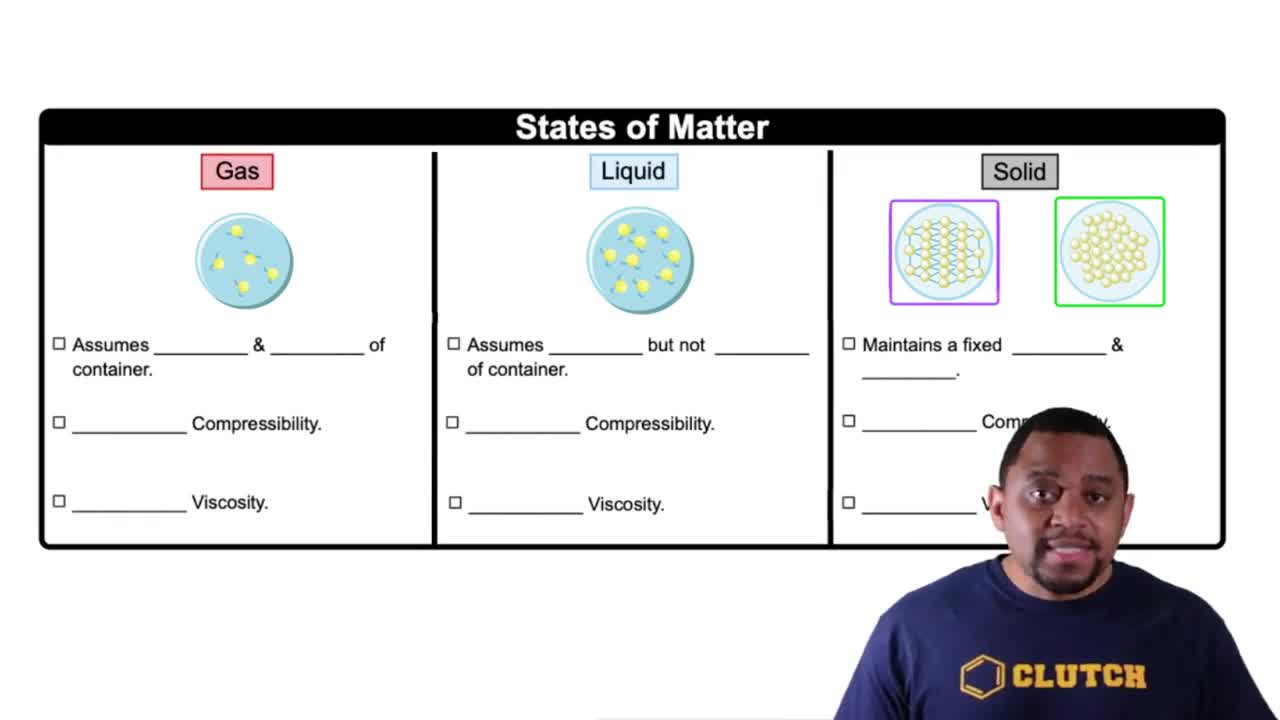
    Form with fixed shape and volume, low compressibility, and high resistance to movement unless force is applied.
  • Liquid

    Form that adapts to the shape but not the volume of its container, with moderate compressibility and viscosity.
  • Gas

    Form that takes both the shape and volume of its container, with high compressibility and low resistance to flow.
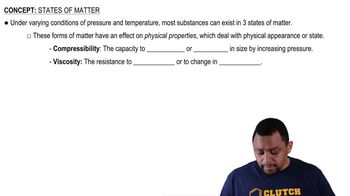
  • Compressibility

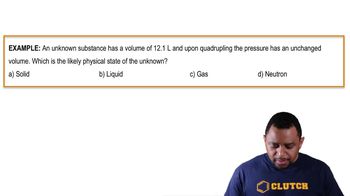
    Capacity of a substance to decrease in size when pressure is applied, highest in gases and lowest in solids.
  • Viscosity

    Measure of resistance to flow or shape change; higher values mean slower movement, as seen in honey.
  • Physical Property

    Characteristic such as appearance or state that can be observed without changing the substance's identity.
  • Container

    Object that determines the possible shape and, for gases, the volume a substance can occupy.
  • Molecule

    Smallest unit of a substance, whose arrangement and movement differ in solids, liquids, and gases.
  • Volume

    Amount of three-dimensional space a substance occupies, which can be fixed or variable depending on the state.
  • Shape

    Form or outline a substance maintains or assumes, which varies among solids, liquids, and gases.
  • Pressure

    Force applied to a substance, affecting its compressibility, especially in gases.
  • Resistance

    Opposition to movement or flow within a substance, closely related to viscosity.
  • State

    Distinct form—solid, liquid, or gas—in which a substance can exist, each with unique properties.