Back

Overview of Protein Synthesis definitions

Control buttons has been changed to "navigation" mode.
1/13
  • Central Dogma

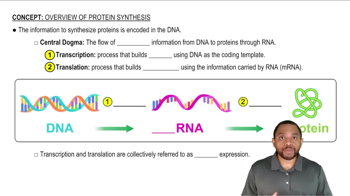
    Describes the directional flow of genetic information from DNA to RNA and then to protein within cells.
  • DNA

    Serves as the original genetic blueprint, storing instructions for building all proteins in an organism.
  • RNA

    Acts as an intermediary molecule, carrying genetic instructions from DNA to the protein-making machinery.
  • mRNA

    A type of RNA that conveys genetic information from DNA to ribosomes for protein assembly.
  • Transcription

    The cellular process where a segment of DNA is copied to produce a complementary mRNA strand.
  • Translation

    The process where ribosomes use mRNA sequences to assemble amino acids into functional proteins.
  • Gene Expression

    The combined processes of transcription and translation, resulting in the production of proteins from genetic code.
  • Double Helix

    The structural shape of DNA, consisting of two intertwined strands forming a spiral.
  • Genetic Information

    Encoded instructions within DNA that determine the synthesis and function of proteins.
  • Amino Acids

    Building blocks linked together during translation to form proteins as directed by mRNA.
  • Protein

    A functional molecule composed of amino acids, essential for cellular structure and activity.
  • Template

    A DNA strand used as a guide to synthesize a complementary mRNA sequence during transcription.
  • Genes

    Specific DNA segments that encode instructions for making particular proteins.