Back

First Law of Thermodynamics definitions

Control buttons has been changed to "navigation" mode.
1/14
  • First Law of Thermodynamics

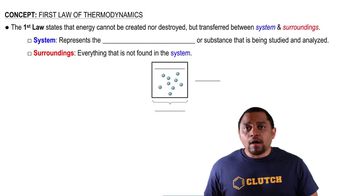
    Principle stating energy is neither created nor destroyed, only transferred between a studied substance and everything else.
  • System

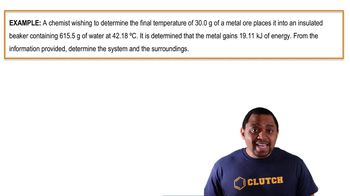
    Substance or chemical reaction under observation, distinct from its container or external environment.
  • Surroundings

    Everything external to the studied substance, including containers, observers, and the universe.
  • Energy Transfer

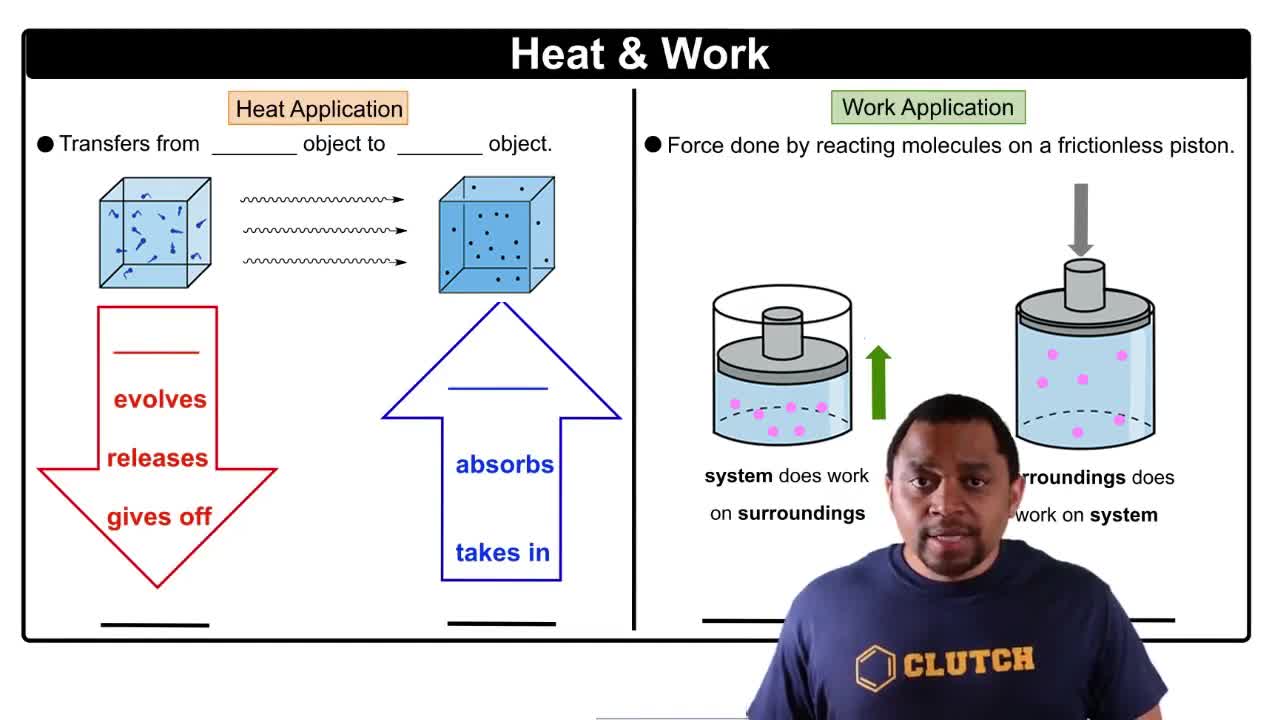
    Movement of energy between a studied substance and its environment, occurring as heat or work.
  • Heat

    Thermal energy flowing from a hotter object to a colder one, represented by the variable q.
  • Work

    Energy associated with movement against gravity or an opposing force, represented by the variable w.
  • Thermal Energy

    Form of energy related to temperature differences, responsible for heat flow between objects.
  • Sign Convention

    Rule assigning positive or negative values to heat and work, depending on energy gain or loss by the system.
  • q

    Symbol representing heat; positive when the system absorbs energy, negative when it releases energy.
  • w

    Symbol representing work; negative when the system does work on its environment, positive when work is done on it.
  • Opposing Force

    Resistance encountered by molecules during movement, such as gravity or pressure from a piston.
  • Frictionless Piston

    Device allowing gas molecules to expand or contract without energy loss due to friction, used to illustrate work.
  • Temperature Gradient

    Difference in temperature between two objects, driving the flow of thermal energy as heat.
  • Energy Conservation

    Concept that total energy remains constant, only changing forms or locations within a system and its environment.