Back

Chemistry Gas Laws quiz

Control buttons has been changed to "navigation" mode.
1/15
  • What is the ideal gas law equation?

    The ideal gas law equation is PV = nRT, relating pressure, volume, moles, and temperature of a gas.
  • Which two variables does Boyle's Law relate, and how are they related?

    Boyle's Law relates pressure and volume, which are inversely proportional at constant temperature and moles.
  • What is the formula for Boyle's Law?

    The formula for Boyle's Law is P1V1 = P2V2.
  • How does increasing pressure affect volume according to Boyle's Law?

    Increasing pressure decreases volume, as they are inversely proportional.
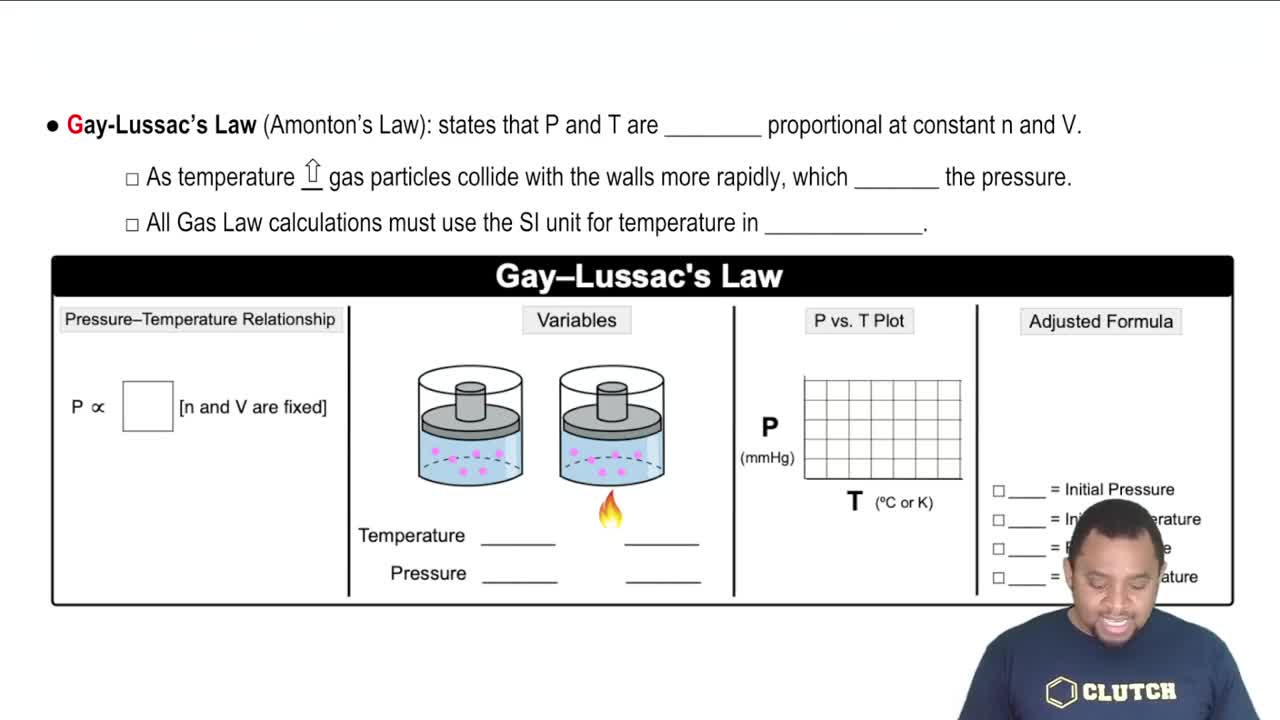
  • Which two variables does Gay Lussac's Law relate, and how are they related?

    Gay Lussac's Law relates pressure and temperature, which are directly proportional at constant volume and moles.
  • What is the formula for Gay Lussac's Law?

    The formula for Gay Lussac's Law is P1/T1 = P2/T2.
  • Why must temperature be measured in Kelvin for gas law calculations?

    Temperature must be in Kelvin because gas law relationships require an absolute temperature scale to avoid negative or zero values.
  • What happens to pressure if temperature increases in a fixed volume container?

    Pressure increases because gas particles move faster and collide with the container walls more forcefully.
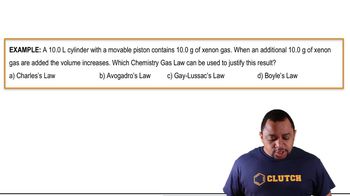
  • Which two variables does Avogadro's Law relate, and how are they related?

    Avogadro's Law relates volume and moles, which are directly proportional at constant pressure and temperature.
  • What is the formula for Avogadro's Law?

    The formula for Avogadro's Law is V1/n1 = V2/n2.
  • If the number of moles of gas increases at constant pressure and temperature, what happens to the volume?

    The volume increases because volume and moles are directly proportional.
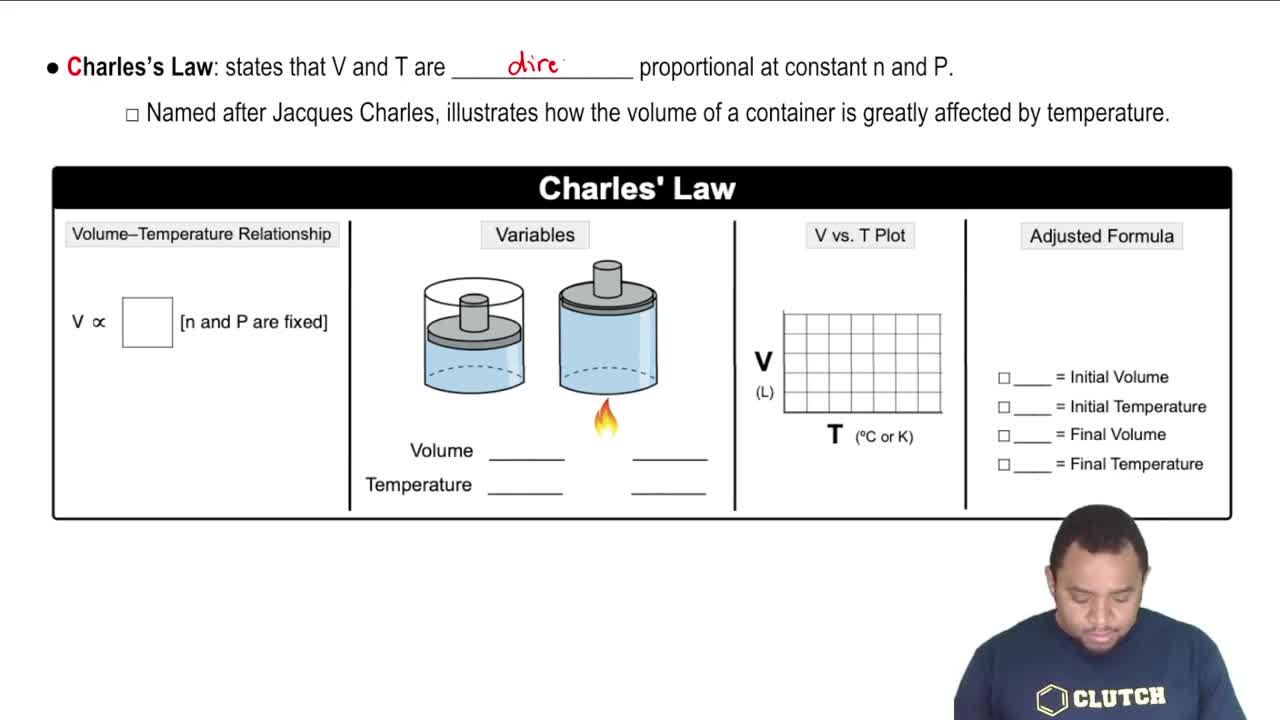
  • Which two variables does Charles' Law relate, and how are they related?

    Charles' Law relates volume and temperature, which are directly proportional at constant pressure and moles.
  • What is the formula for Charles' Law?

    The formula for Charles' Law is V1/T1 = V2/T2.
  • What happens to the volume of a gas if the temperature increases at constant pressure?

    The volume increases because gas particles gain energy and expand the container.
  • How are direct and inverse relationships between gas variables shown on a graph?

    Direct relationships are shown as lines increasing together, while inverse relationships show one variable increasing as the other decreases.