
Textbook Question
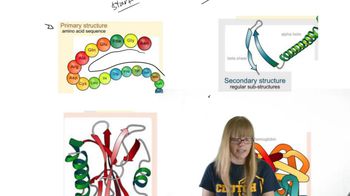
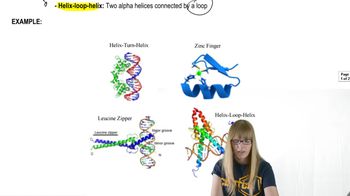
Define and compare the four levels of protein organization.

 Verified step by step guidance
 05:05
05:05
 09:22 05:05
Define and compare the four levels of protein organization.
Several amino acid substitutions in the α and β chains of human hemoglobin are shown in the following table.
Using the code table, determine how many of them can occur as a result of a single-nucleotide change.
List three different types of posttranslational modifications that may happen to a protein and the significance of each in the context of protein function.
HbS results in anemia and resistance to malaria, whereas in those with HbA, the parasite Plasmodium falciparum is able to invade red blood cells and cause malaria. Predict whether those with HbC are likely to be anemic and whether they would be resistant to malaria.
List as many different categories of protein functions as you can. Wherever possible, give an example of each category.
How do covalent disulfide bonds, hydrogen bonds with water, and hydrophobic interactions all contribute to a protein's tertiary structure?