
Textbook Question
Given the inheritance pattern of coat color in rats described in Problem 17, predict the genotype and phenotype of the parents who produced the following offspring:
9/16 gray: 3/16 yellow: 4/16 albino
 Verified step by step guidance
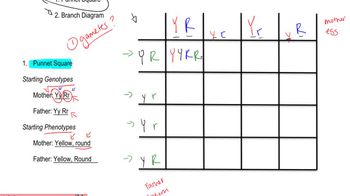
 15:24
15:24
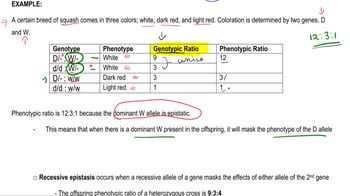 13:08
13:08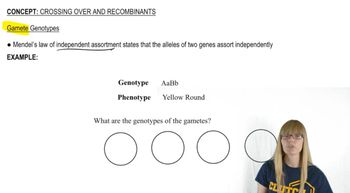 07:52
07:52Given the inheritance pattern of coat color in rats described in Problem 17, predict the genotype and phenotype of the parents who produced the following offspring:
9/16 gray: 3/16 yellow: 4/16 albino
Given the inheritance pattern of coat color in rats described in Problem 17, predict the genotype and phenotype of the parents who produced the following offspring:
9/16 gray: 3/16 yellow: 3/16 black: 1/16 cream
In humans, the ABO blood type is under the control of autosomal multiple alleles. Color blindness is a recessive X-linked trait. If two parents who are both type A and have normal vision produce a son who is color-blind and is type O, what is the probability that their next child will be a female who has normal vision and is type O?
In goats, the development of the beard is due to a recessive gene. The following cross involving true-breeding goats was made and carried to the F₂ generation:
Offer an explanation for the inheritance and expression of this trait, diagramming the cross. Propose one or more crosses to test your hypothesis.
In rats, the following genotypes of two independently assorting autosomal genes determine coat color:
A third gene pair on a separate autosome determines whether or not any color will be produced. The CC and Cc genotypes allow color according to the expression of the A and B alleles. However, the cc genotype results in albino rats regardless of the A and B alleles present. Determine the F₁ phenotypic ratio of the following crosses:
AaBbCc×AaBbcc
A husband and wife have normal vision, although both of their fathers are red–green color-blind, an inherited X-linked recessive condition. What is the probability that their first child will be (a) a normal son, (b) a normal daughter, (c) a color-blind son, (d) a color-blind daughter?