
Textbook Question
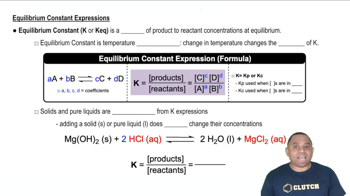
Find and fix each mistake in the equilibrium constant expressions. a. 2 H2S(g) ⇌ 2 H2(g) + S2(g) K = [H2][S2]/[H2S]
 Verified step by step guidance
 04:21
04:21
 03:20
03:20 07:32
07:32Find and fix each mistake in the equilibrium constant expressions. a. 2 H2S(g) ⇌ 2 H2(g) + S2(g) K = [H2][S2]/[H2S]
Write an expression for the equilibrium constant of each chemical equation.
a. SbCl5(g) ⇌ SbCl3(g) + Cl2(g)
b.2 BrNO(g) ⇌ 2 NO(g) + Br2(g)
c. CH4(g) + 2 H2S(g) ⇌ CS2(g) + 4 H2(g)
d. 2 CO(g) + O2(g) ⇌ 2 CO2(g)
Find and fix each mistake in the equilibrium constant expressions. b. CO(g) + Cl2(g) ⇌ COCl2(g) K = [CO][Cl2]/[COCl2]
H2 and I2 are combined in a flask and allowed to react according to the reaction: H2(g) + I2(g) ⇌ 2 HI(g) Examine the figures (sequential in time) and answer the questions: a. Which figure represents the point at which equilibrium is reached?
Ethene (C2H4) can be halogenated by this reaction: C2H4(g) + X2(g) ⇌ C2H4X2(g) where X2 can be Cl2 (green), Br2 (brown), or I2 (purple). Examine the three figures representing equilibrium concentrations in this reaction at the same temperature for the three different hal- ogens. Rank the equilibrium constants for the three reactions from largest to smallest.
A chemist trying to synthesize a particular compound attempts two different synthesis reactions. The equilibrium constants for the two reactions are 23.3 and 2.2⨉104 at room temperature. However, upon carrying out both reactions for 15 minutes, the chemist finds that the reaction with the smaller equilibrium constant produces more of the desired product. Explain how this might be possible.