
Textbook Question
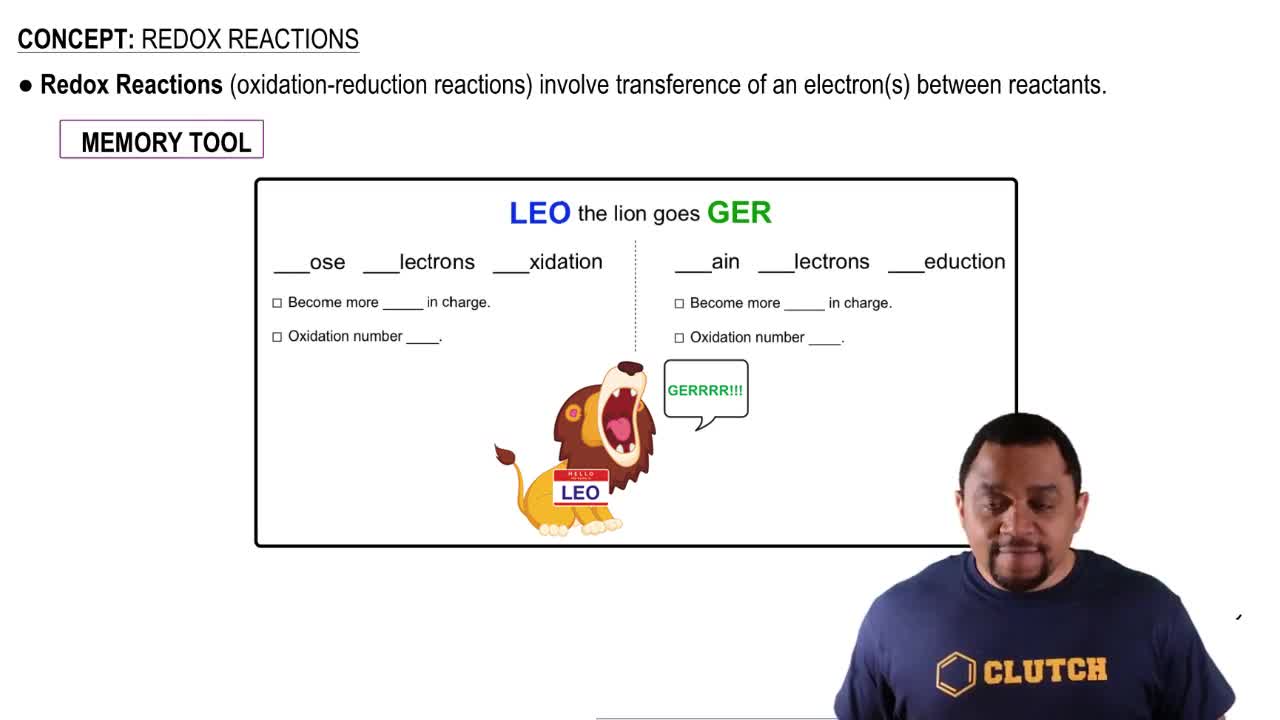
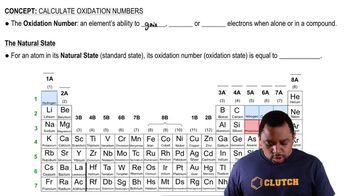
Classify each of the following unbalanced half-reactions as either an oxidation or a reduction. (b) Pt2+ (aq) → Pt(s)

 Verified step by step guidance
 01:53
01:53
 02:42
02:42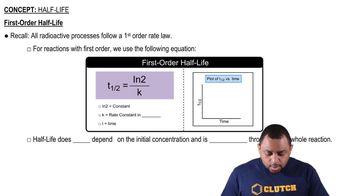 01:49
01:49Classify each of the following unbalanced half-reactions as either an oxidation or a reduction. (b) Pt2+ (aq) → Pt(s)
Classify each of the following unbalanced half-reactions as either an oxidation or a reduction. (c) MnO4-(aq) → MnO42-(aq)
Classify each of the following unbalanced half-reactions as either an oxidation or a reduction. (b) H2O2(aq) → O2(g)
Porous pellets of TiO2 can be reduced to titanium metal at the cathode of an electrochemical cell containing molten CaCl2 as the electrolyte. When the TiO2 is reduced, the O2-ions dis-solve in the CaCl2 and are subsequently oxidized to O2 gas at the anode. This approach may be the basis for a less expensive process than the one currently used for producing titanium.
(c) Write balanced equations for the anode, cathode, and overall cell reactions.
Classify each of the following unbalanced half-reactions as either an oxidation or a reduction. (a) O2(g) → OH-(aq)
Porous pellets of TiO2 can be reduced to titanium metal at the cathode of an electrochemical cell containing molten CaCl2 as the electrolyte. When the TiO2 is reduced, the O2-ions dis-solve in the CaCl2 and are subsequently oxidized to O2 gas at the anode. This approach may be the basis for a less expensive process than the one currently used for producing titanium.
(a) Label the anode and cathode, and indicate the signs of the electrodes.