 Back
Backupload
1 student found this helpful
You can tap to flip the card.
Control buttons has been changed to "navigation" mode.
1/11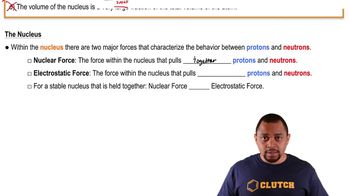
 02:53
02:53
Terms in this set (11)
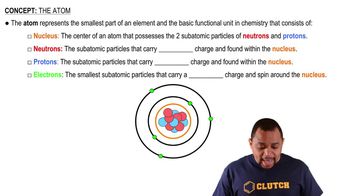
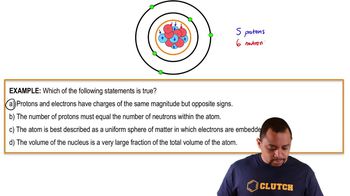
The atomic number is the number of protons in the nucleus of an atom.
The mass number is the sum of the number of protons and neutrons in the nucleus.
The nucleus is made up of protons and neutrons.
The number of protons determines the element identity, not neutrons.
Isotopes are atoms of the same element with the same number of protons but different numbers of neutrons.
They have the same number of electrons.
Ions differ in the number of electrons compared to neutral atoms; protons remain the same.
The ion is Ga3+ because it has 3 fewer electrons than protons.
The ion is Ba2+ because it has 2 fewer electrons than protons.
The ion is F- because it has 1 more electron than protons.
The ion is Po2- because it has 2 more electrons than protons.