 Back
BackSI Units and Chemical Measurements in General Chemistry
 02:13
02:13
Terms in this set (20)
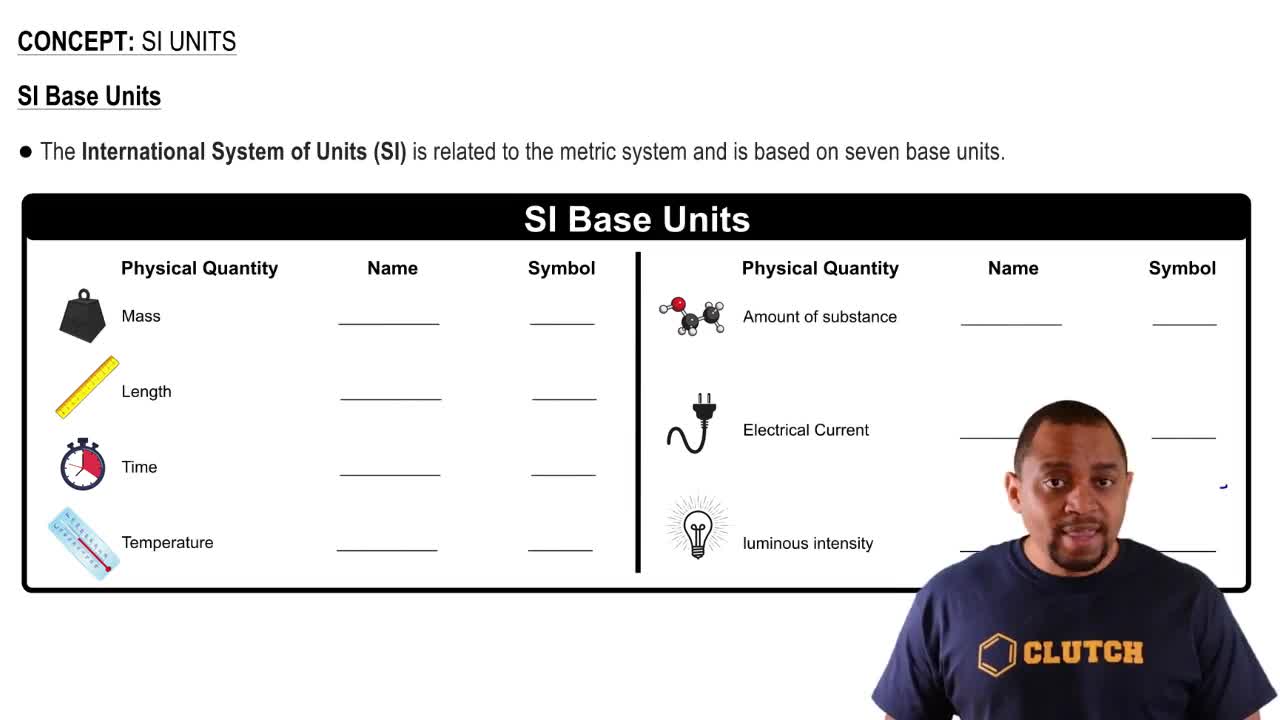
SI base units are the fundamental units of measurement from which all other units are derived.
The SI base unit for length is the meter, defined by the distance light travels in a vacuum during a specific fraction of a second.
The meter is defined as the distance light travels in a vacuum during \(1/299,792,458\) of a second.
The SI base unit for mass is the kilogram.
The SI base unit for time is the second, defined by the transition frequency of the Cesium atom.
The second is defined by the transition frequency of the Cesium-133 atom.
The SI base unit for electric current is the ampere.
The SI base unit for luminous intensity is the candela.
Metric prefixes are used to express multiples or fractions of SI units, such as kilo- for 1000 times and milli- for one-thousandth.
The prefix kilo- means \(10^{3}\) or 1000 times the base unit.
The prefix milli- means \(10^{-3}\) or one-thousandth of the base unit.
SI units provide a standardized system for measurements, ensuring consistency and accuracy in chemical calculations and experiments.
Volumetric analysis is a quantitative chemical analysis method based on measuring volume to determine concentration.
Chemical concentration refers to the amount of a substance in a given volume or mass of a mixture or solution.
The Cesium atom's transition frequency defines the second, the SI base unit of time.
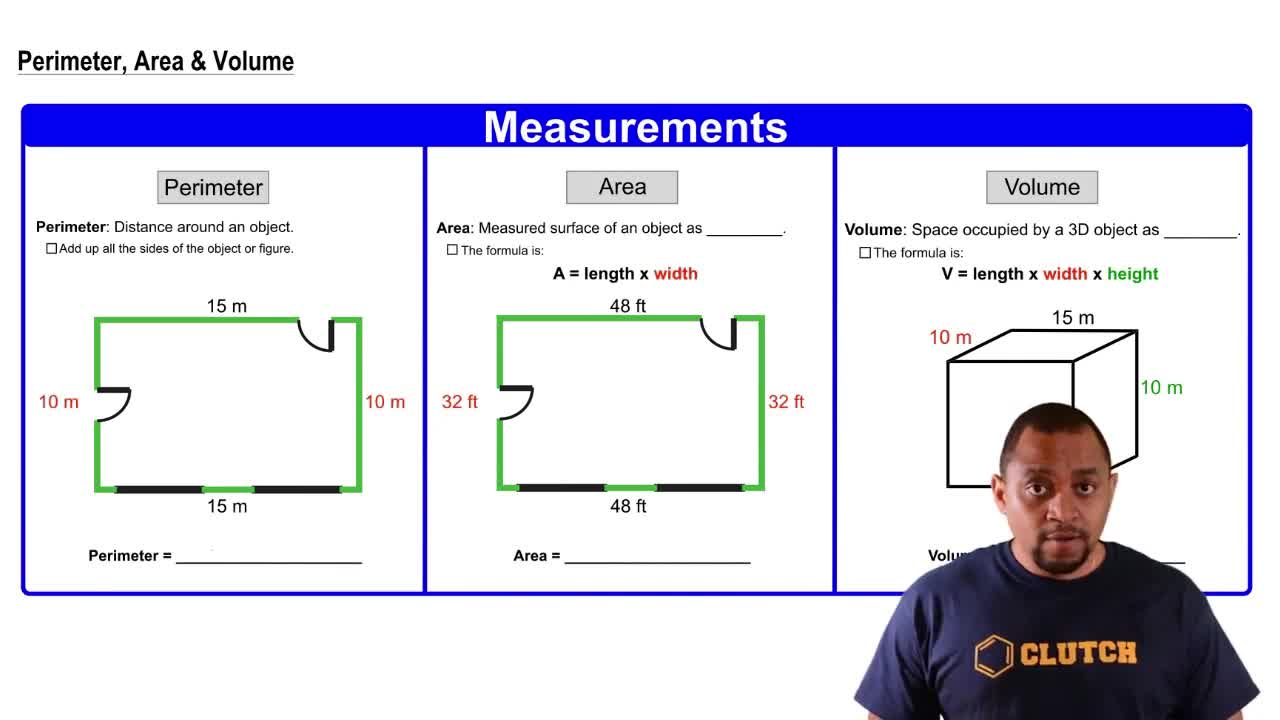
Derived units are formed by combining SI base units according to algebraic relationships.
Example: The unit of speed, meters per second (\(m/s\)), is derived from base units.
Physical quantities such as length, mass, and time are measured using SI units as standards.
Standardized SI units ensure clear and consistent communication of measurements worldwide.
Precision in measurements ensures reliability and reproducibility in chemical experiments.