Join thousands of students who trust us to help them ace their exams!
Multiple Choice
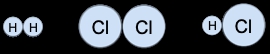
If the sum of the atomic radii of diatomic hydrogen is 74 pm and of diatomic chlorine is 198 pm, what is the sum of the atomic radii between a hydrogen atom and a chlorine atom.
A
272 pm
B
136 pm
C
235 pm
D
173 pm
E
142 pm
0 Comments
Verified step by step guidance
1
Identify the given information: The sum of the atomic radii of diatomic hydrogen (H2) is 74 pm, and the sum of the atomic radii of diatomic chlorine (Cl2) is 198 pm.
Understand that the atomic radius of a single hydrogen atom can be found by dividing the total radius of H2 by 2, and similarly for chlorine.
Calculate the atomic radius of a single hydrogen atom: \( \text{Radius of H} = \frac{74 \text{ pm}}{2} \).
Calculate the atomic radius of a single chlorine atom: \( \text{Radius of Cl} = \frac{198 \text{ pm}}{2} \).
Add the atomic radius of hydrogen and chlorine to find the sum of the atomic radii in HCl: \( \text{Sum of radii in HCl} = \text{Radius of H} + \text{Radius of Cl} \).


 Verified step by step guidance