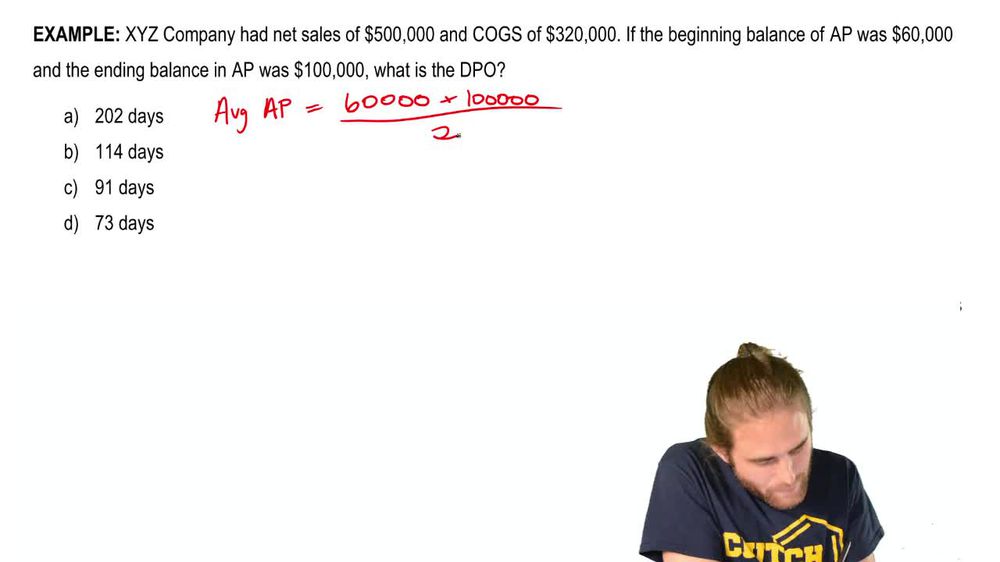
DPO measures how long, on average, a company takes to pay its suppliers for purchases made on credit.
What is the formula for calculating DPO?
DPO is calculated as 365 divided by the accounts payable turnover ratio.
How do you calculate accounts payable turnover?
Accounts payable turnover is calculated as cost of goods sold (COGS) divided by average accounts payable.
How do you find the average accounts payable?
Average accounts payable is calculated as the beginning balance plus the ending balance, divided by 2.
What does a lower DPO indicate about a company's liquidity?
A lower DPO suggests strong liquidity, meaning the company pays its suppliers quickly.
What might a higher DPO suggest about a company's relationship with suppliers?
A higher DPO may imply that the company has leverage with suppliers and can negotiate longer payment terms.
Why might a company want to have a higher DPO?
A higher DPO allows a company to hold onto its cash longer, effectively using supplier credit as an interest-free loan.
Why is benchmarking DPO against industry standards important?
Benchmarking helps determine if a company's DPO is in line with competitors and industry norms, providing context for analysis.
How does DPO affect a creditor's evaluation of a company?
Creditors use DPO to assess a company's financial health and liquidity when considering lending decisions.
What does it mean if a company has a DPO of 10 days?
It means the company pays its suppliers, on average, 10 days after making a purchase.
What does it mean if a company has a DPO of 60 days?
It means the company takes, on average, 60 days to pay its suppliers after making a purchase.
What is the significance of not paying interest on accounts payable?
It means companies can use supplier credit as a short-term, interest-free source of financing.
How can DPO be both good and bad for a company?
A high DPO can indicate strong supplier relationships or potential liquidity issues, while a low DPO shows quick payments but may limit cash flow flexibility.
What is the numerator in the DPO formula?
The numerator in the DPO formula is 365, representing the number of days in a year.
Why do different industries have different DPO benchmarks?
Different industries have varying credit terms and supplier relationships, affecting what is considered a normal or healthy DPO.
 Back
Back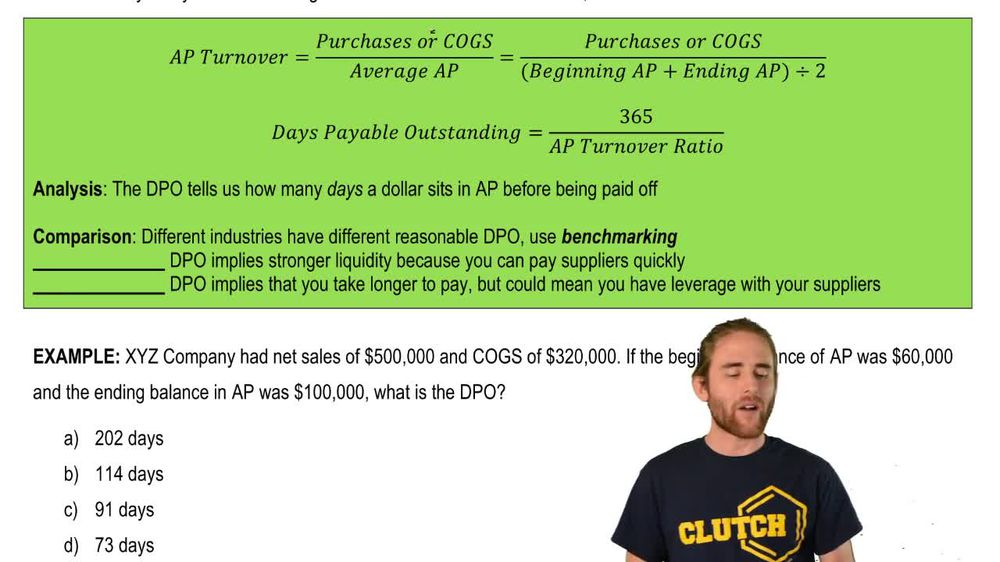
 03:21
03:21