Skip to main content
Financial Accounting
My Course
Learn
Exam Prep
AI Tutor
Study Guides
Flashcards
Explore
Try the app
My Course
Learn
Exam Prep
AI Tutor
Study Guides
Flashcards
Explore
Try the app
Back
Physical Inventory Count, Ownership of Goods, and Consigned Goods definitions
You can tap to flip the card.
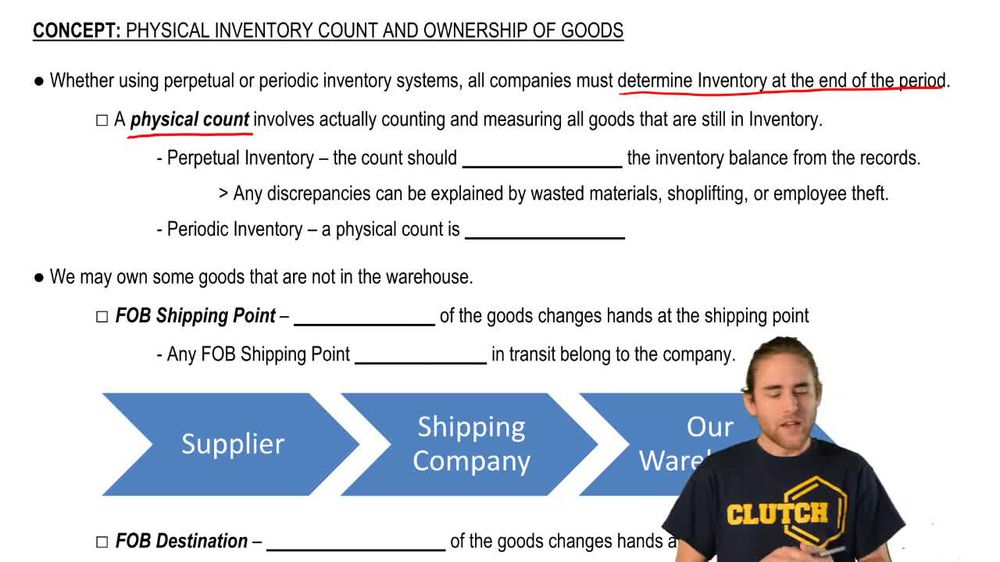
Physical Inventory Count
You can tap to flip the card.
👆
Physical Inventory Count
Process of manually verifying inventory quantities at period end to ensure accuracy of recorded balances.
Track progress
Control buttons has been changed to "navigation" mode.
1/15
Related flashcards
Related practice
Recommended videos
Physical Inventory Count, Ownership of Goods, and Consigned Goods quiz #1
Physical Inventory Count, Ownership of Goods, and Consigned Goods
18 Terms
Physical Inventory Count, Ownership of Goods, and Consigned Goods
5. Inventory
10 problems
Topic
Specific Identification
5. Inventory
10 problems
Topic
5. Inventory - Part 1 of 2
7 topics
15 problems
Chapter
5. Inventory - Part 2 of 2
1 topic
3 problems
Chapter
Guided course
03:56
Ownership of Goods
5
views
Guided course
04:42
Consignment
3
views
Guided course
02:06
Physical Inventory Count
8
views
Terms in this set (15)
Hide definitions
Physical Inventory Count
Process of manually verifying inventory quantities at period end to ensure accuracy of recorded balances.
Perpetual System
Inventory tracking method with continuous updates for each purchase and sale, reflecting real-time balances.
Periodic System
Inventory method updating balances only at period end, requiring a physical count to determine ending inventory.
FOB Shipping Point
Shipping term where ownership transfers to buyer when goods leave the seller's location, including in-transit items in buyer's inventory.
FOB Destination
Shipping term where ownership transfers to buyer upon delivery, keeping in-transit goods in seller's inventory until arrival.
Ownership of Goods
Legal right to include items in inventory, determined by shipping terms and consignment arrangements.
Goods in Transit
Items being shipped between locations, whose inventory inclusion depends on FOB terms.
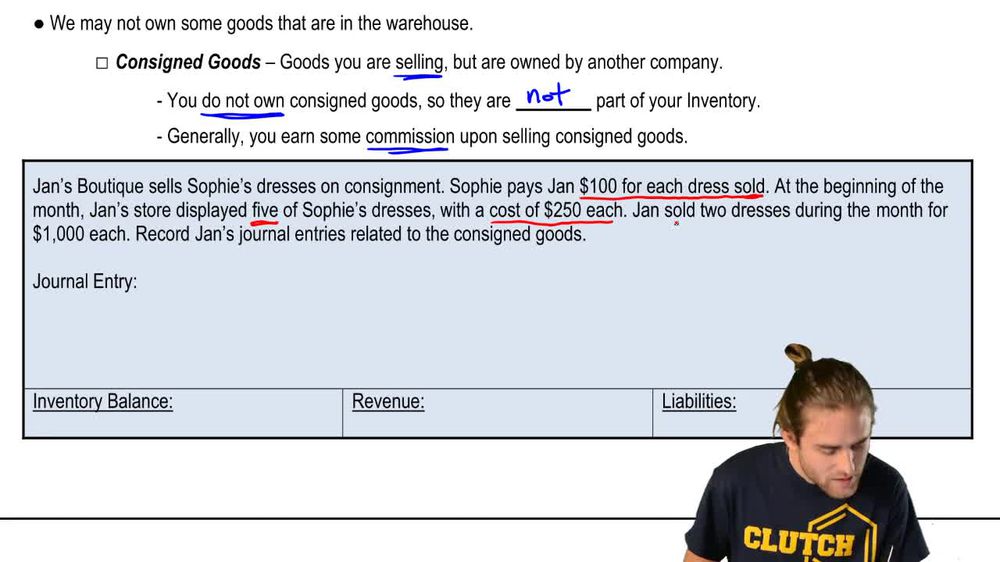
Consigned Goods
Items held and sold by a party on behalf of the owner, excluded from the holder's inventory.
Consignor
Party retaining ownership of goods placed with another for sale, recording inventory on their own books.
Consignee
Party selling goods for another, earning commission but not including items in their inventory.
Commission Revenue
Earnings received by a seller for facilitating sales of goods owned by another party.
Liability to Consignor
Obligation to remit proceeds from consigned goods sales, minus commission, to the owner.
Inventory Balance
Amount reported on the balance sheet representing goods owned and available for sale at period end.
Journal Entry
Accounting record documenting transactions, such as cash received, revenue earned, and liabilities incurred.
Balance Sheet
Financial statement listing assets, liabilities, and equity, including inventory owned at period end.
 BackBack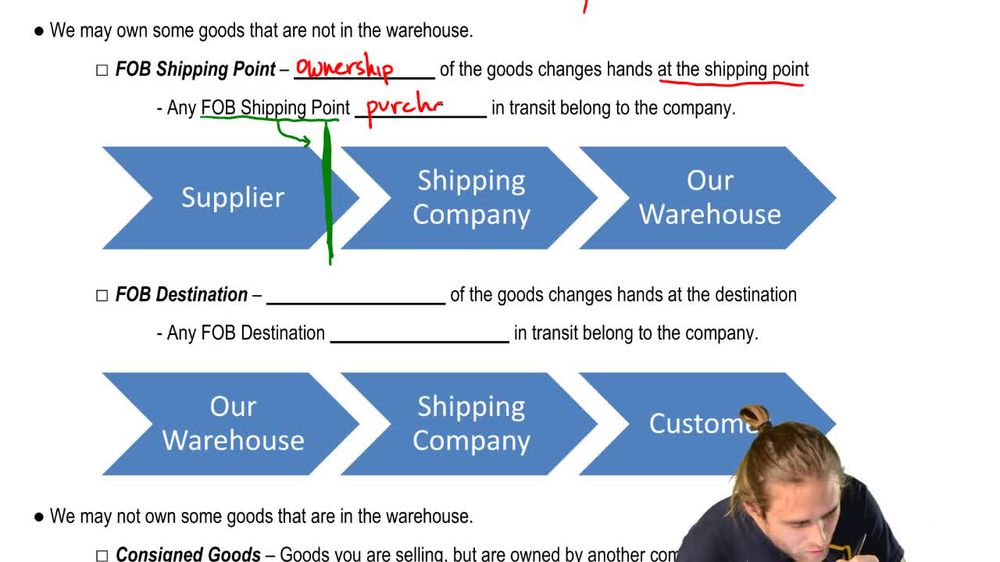
 03:56
03:56