Skip to main content
Financial Accounting
My Course
Learn
Exam Prep
AI Tutor
Study Guides
Flashcards
Explore
Try the app
My Course
Learn
Exam Prep
AI Tutor
Study Guides
Flashcards
Explore
Try the app
Back
Perpetual Inventory - FIFO, LIFO, and Average Cost quiz
You can tap to flip the card.
What does FIFO stand for in inventory management?
You can tap to flip the card.
👆
What does FIFO stand for in inventory management?
FIFO stands for First In, First Out, meaning the oldest inventory items are sold first.
Track progress
Control buttons has been changed to "navigation" mode.
1/15
Related flashcards
Related practice
Recommended videos
Perpetual Inventory - FIFO, LIFO, and Average Cost definitions
Perpetual Inventory - FIFO, LIFO, and Average Cost
13 Terms
Perpetual Inventory - FIFO, LIFO, and Average Cost
5. Inventory
5 problems
Topic
Financial Statement Effects of Inventory Costing Methods
5. Inventory
10 problems
Topic
5. Inventory - Part 1 of 2
7 topics
15 problems
Chapter
5. Inventory - Part 2 of 2
1 topic
3 problems
Chapter
Guided course
10:12
Perpetual Inventory Average Cost
3
views
Guided course
09:44
Perpetual Inventory FIFO
5
views
Guided course
07:15
Perpetual Inventory LIFO
3
views
Terms in this set (15)
Hide definitions
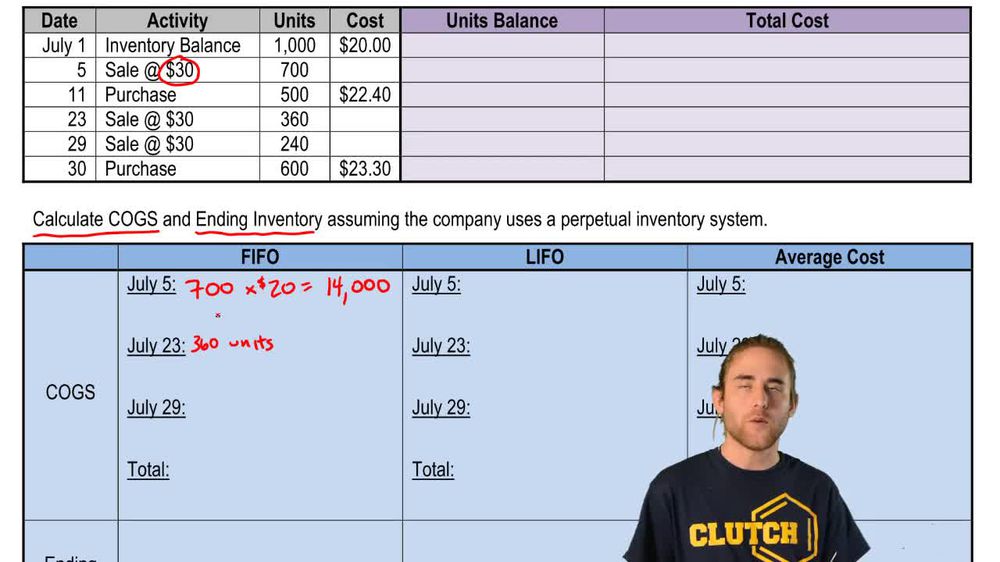
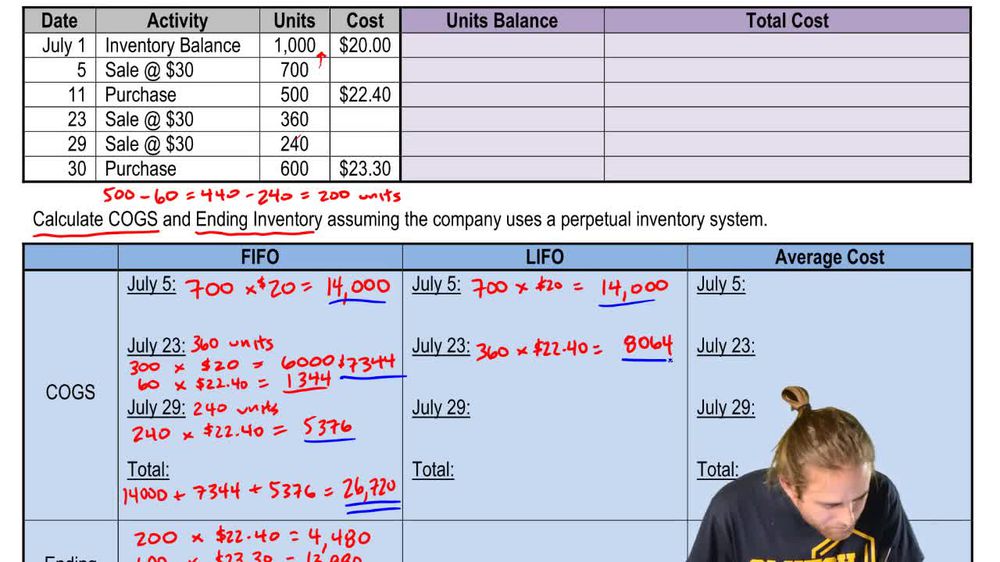
What does FIFO stand for in inventory management?
FIFO stands for First In, First Out, meaning the oldest inventory items are sold first.
How does FIFO affect the cost of goods sold (COGS)?
FIFO includes the cost of older units in COGS, reflecting what was paid for the earliest inventory.
What does LIFO stand for in inventory management?
LIFO stands for Last In, First Out, meaning the newest inventory items are sold first.
How does LIFO affect the cost of goods sold (COGS)?
LIFO includes the cost of newer units in COGS, reflecting what was paid for the most recent inventory.
What is the Average Cost method in inventory management?
The Average Cost method calculates COGS based on the average cost of all units available for sale.
How is the average cost calculated in a perpetual inventory system?
The average cost is calculated by dividing the total cost of inventory by the number of units, updating after each purchase and sale.
What is a moving average in the context of perpetual inventory?
A moving average means the average cost per unit is updated continuously as inventory is bought and sold.
Why are cost flow assumptions used in inventory accounting?
Cost flow assumptions are used to track COGS and inventory when selling identical items purchased at different prices.
Do cost flow assumptions need to match the physical flow of goods?
No, cost flow assumptions do not need to match the physical flow of goods; they are used for accounting purposes.
What is the physical flow of goods in inventory management?
The physical flow refers to the actual movement of goods, such as which specific item is sold, regardless of accounting method.
How does the perpetual inventory system differ from periodic inventory regarding cost updates?
In a perpetual system, inventory records and costs are updated continuously after each transaction.
Why might companies use FIFO, LIFO, or Average Cost for identical inventory items?
Companies use these methods to simplify accounting for identical items bought at different prices.
What happens to the average cost per unit after each purchase or sale in a perpetual system?
The average cost per unit is recalculated and updated after every purchase or sale.
How does buying inventory at different prices affect inventory accounting?
Buying at different prices requires using a cost flow assumption to determine COGS and inventory value.
What formula is used to calculate average cost per unit?
Average cost per unit is calculated as total cost divided by total quantity of units.
 BackBack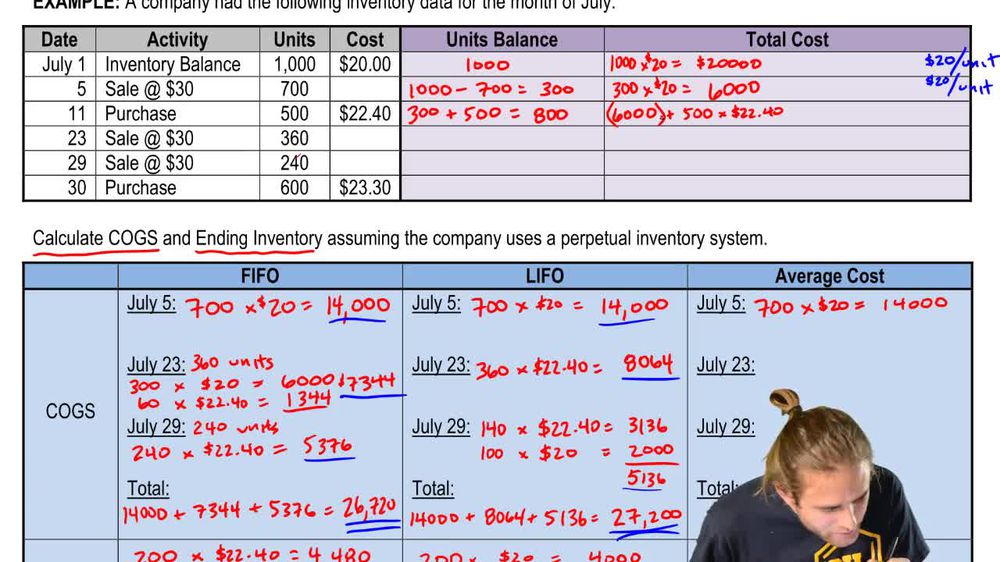
 10:12
10:12